How Melamine Is Used in Melamine Tableware
Tech Blog How Melamine Is Used in Melamine Tableware If you work with melamine or food-contact plastics, you already know that melamine has a complicated
Superabsorbent polymers (SAPs) are widely used in agriculture, environmental remediation and industrial spill treatment, but mainstream petroleum-based polyacrylate absorbents have obvious drawbacks: non-biodegradable, high raw material cost, severe salt tolerance decline in saline soil, causing long-term soil microplastic pollution.
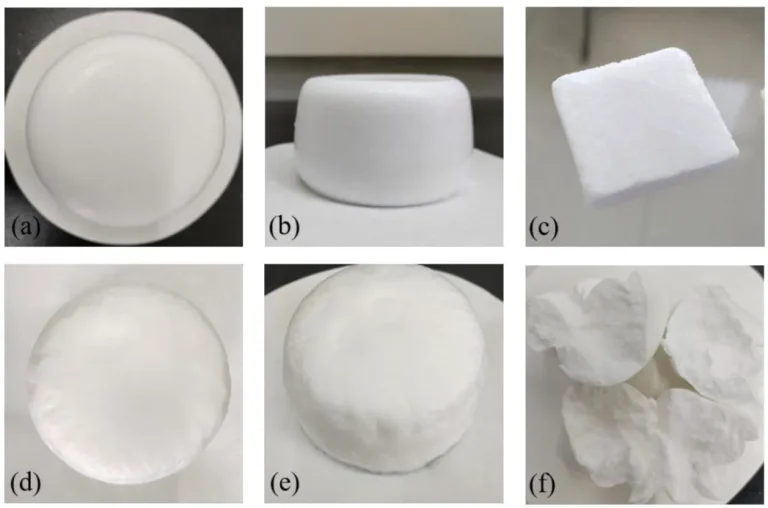
Urea formaldehyde is a low-cost porous base material with lightweight, easy forming and partial water absorption capacity. However, pure UF foam suffers fatal defects: severe shrinkage & cracking after drying, high pulverization rate, poor mechanical toughness, short water retention cycle, limiting large-scale promotion as absorbents.
Hydroxypropyl methylcellulose (HPMC) is renewable biomass cellulose derivative with massive hydroxyl groups, which can crosslink with UF molecular chains to improve foam flexibility and basic water absorption. Still, single HPMC modified UFHM foam still shows pore collapse and surface cracks. To solve this bottleneck, KH550 silane-coupled hydrophilic nano silica (HSN) is introduced as secondary reinforcing filler to build triple crosslinked UF-HPMC-HSN (UHMS) composite foam absorbent.
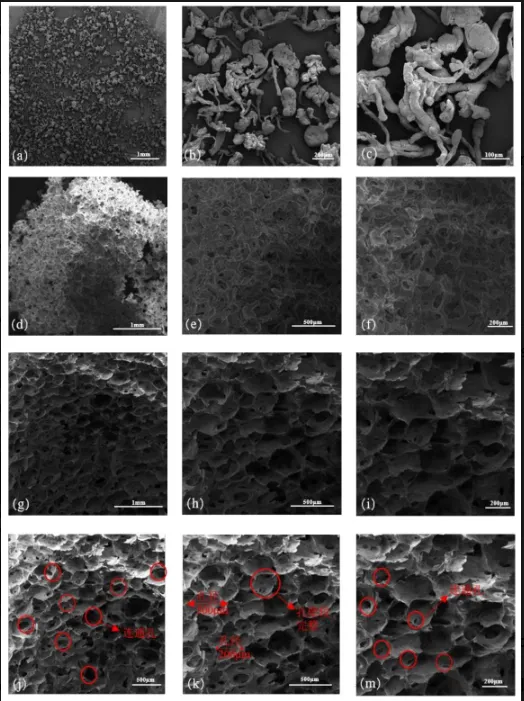
This article systematically elaborates the whole physical foaming preparation route, single-factor & orthogonal optimization of raw material dosage, microscopic morphology (SEM/EDS), molecular structure (FTIR/Raman), crystal form (XRD) and thermal stability (TGA) characterization, as well as water absorption, water retention, cycle regeneration performance test data, providing scalable green absorbent production formulas for agricultural material factories and environmental engineering manufacturers.
Optimal stirring speed: 3500 r/min (balances foam uniformity and pore opening rate)
These drawbacks require secondary nano silica reinforcement modification.
HPMC gel network + HSN nano hydrogen-bond dual system locks water molecules and slows evaporation loss.
Far superior to pure UFHM foam (only 52% after 10 cycles), nano silica framework prevents irreversible pore collapse.
Dry finished UHMS has smooth surface without cracks or shrinkage deformation.
HSN nano silica forms heat insulation barrier to delay polymer thermal chain scission.

Tech Blog How Melamine Is Used in Melamine Tableware If you work with melamine or food-contact plastics, you already know that melamine has a complicated

Tech Blog The effect of water temperature on the solubility of melamine The solubility of melamine is the result of the competition between “hydrogen bonding

Tech Blog What is the raw material of urea formaldehyde? Unlike natural materials, urea formaldehyde is purely synthetic, and its performance and safety depend directly

JINGJIANG MELAMINE POWDER
© JINJIANG MELAMINE