jinjiang melamine

Tech Blog

Nanomaterial Modified Urea Formaldehyde Resin Adhesives Research

Urea formaldehyde resin accounts for over 80% of global wood composite bonding materials and is widely used for plywood, particleboard, and medium-density fiberboard (MDF) due to its low cost, fast curing, high corrosion resistance, and fatigue tolerance.

Traditional modification methods (melamine blending, formaldehyde/urea molar ratio adjustment) only deliver limited performance upgrades. Nanomaterials with ultra-large specific surface area, small-size effect, strong interface activity, and high reactivity have emerged as a breakthrough solution to simultaneously reduce formaldehyde emissions and upgrade the all-around mechanical, thermal, and antibacterial properties of UF adhesives.

This article breaks down three mainstream categories of nanomodifiers, their reaction mechanisms, and measurable performance improvements, supported by peer-reviewed laboratory data to assist the wood adhesive research and development team in nanomaterial modified urea formaldehyde resin adhesives research.
Three Core Nanomaterial Categories for UF Resin Modification

Nano-Oxide Modifiers (TiO₂, SiO₂, ZnO, MnO₂, Al₂O₃)

Common nano-oxides include nano TiO₂, nano SiO₂, ZnO, Mn₃O₄, CeO₂, synthesized via sol-gel, microwave hydrothermal, and reflux heating to form nanoparticles, nanorods, or nanofibers.
Core Modification Mechanism:
Nano-oxides interpenetrate UF polymer chains, react with active hydroxyl and methylol groups to raise crosslink density. Their porous surface acts as formaldehyde adsorption sites, while photocatalytic nano TiO₂ further degrades free formaldehyde under UV light.
Key Performance Gains:
  • Formaldehyde reduction: Nano TiO₂-modified plywood cuts formaldehyde emissions by 23.68%; 1 wt% nano TiO₂ addition degrades 37% free formaldehyde under 48 h UV irradiation.
  • Physical traits: Higher viscosity, improved water repellency, adjustable curing speed (acidic nano TiO₂ shortens curing time).
  • Extra value: Nano ZnO, MgO and TiO₂ deliver inherent antibacterial & anti-mold functions for wood panels.

Mineral Nanomaterials (Montmorillonite MMT, Na-MMT, Bentonite Nanoclay)

Nano mineral modifiers are layered silicate nanoclays, dominated by sodium-based montmorillonite (Na-MMT) and organic-modified montmorillonite (OMMT), widely recognized as cost-effective toughening & formaldehyde scavenging fillers.
Core Modification Mechanism:
Nanoclay sheet layers intercalate into UF molecular chains to build physical crosslink networks, boost resin polymerization degree, reduce hydrophilic free hydroxyl groups, and form compact hydrophobic barrier layers to block water penetration.
Lab Verified Data:
  • Unmodified UF free formaldehyde: 0.215%; nano MMT modified UF drops to 0.172%; board formaldehyde content falls from 0.02168 mg/g to 0.00663 mg/g.
  • Mechanical upgrade: OMMT-modified UF elastic modulus rises 63.6% after hot water aging, hardness improves 17.8%; 5% intercalated MMT lifts plywood bonding strength by 72.8% (0.553 MPa → 1.778 MPa).
  • Water resistance: Nano MMT-modified resin absorbs only 8.5% water after 30min soaking vs. 12.3% for pure UF.

Carbon-Based Nanomaterials (NCC, CNF, MFC, MWCNT)

Renewable carbon nanocellulose and synthetic carbon nanotubes are high-performance green modifiers, including:
  • NCC (nanocrystalline cellulose), CNF (cellulose nanofiber), MFC (microfibrillated cellulose): plant-derived biodegradable nanomaterials
  • MWCNT (multi-walled carbon nanotubes): high-strength inorganic carbon nanofillers
Core Modification Mechanism:
Abundant surface hydroxyl groups form dense hydrogen bonds and π-π conjugation structures with UF chains, drastically enhancing crosslink density and building smooth, compact resin surface films to block water and formaldehyde diffusion.
Standout Advantages:
  1. Extreme formaldehyde removal: 2% NCC addition slashes free formaldehyde by 50.9% compared with pure UF resin.
  2. Superior mechanical reinforcement: MWCNT raises UF tensile shear strength by ~90%; MFC steadily improves plywood shear bonding strength.
  3. Thermal & flame retardancy: Carbon frameworks slow thermal decomposition of UF; carboxylated MWCNT composite foam reaches UL-94 V-0 fire rating.
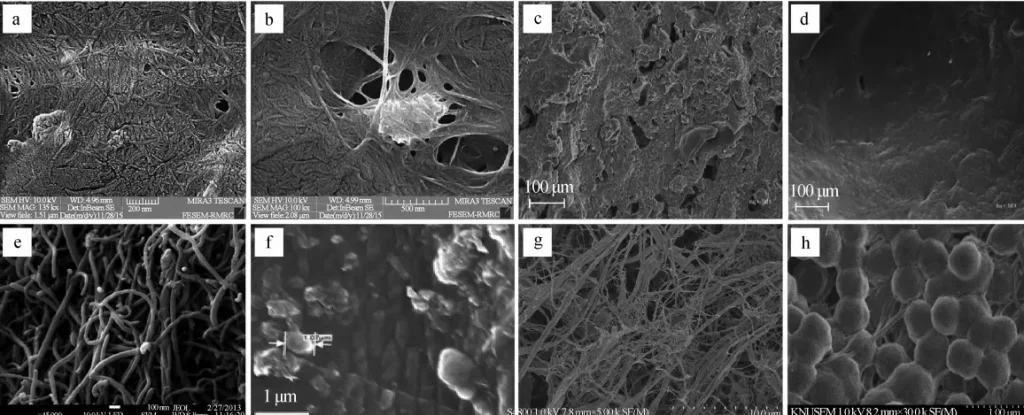
Morphology of carbon-based nanomaterials and their modified UF

How Nanomaterials Improve Every Critical Performance Metric of UF resin

1. Free Formaldehyde Emission Reduction (Top Industry Demand)

Formaldehyde release from UF panels occurs via two paths: direct surface volatilization and continuous hydrolysis of unstable methylene bonds under humidity. Nanomaterials mitigate both routes:
  • Physical adsorption: Large surface area captures free formaldehyde molecules via hydrogen bonding and π-π adsorption.
  • Chemical fixation: Surface active groups covalently lock formaldehyde to prevent long-term release.
  • Photocatalytic degradation: Nano TiO₂ decomposes adsorbed formaldehyde under natural UV light exposure.
Benchmark Test Results:
  • NCC modified UF: -13% ~ -50.9% free; formaldehyde
  • Nano TiO₂ plywood: -23.68% formaldehyde emission;
  • Nano montmorillonite particleboard: 69.4% reduction in solid board formaldehyde residue.

2. Physical & Mechanical Properties

Viscosity & Solid Content

Nano fillers raise UF viscosity due to the surface small-size effect, yet excessive loading (>1.5% NCC, >5% nanoclay) triggers nanoparticle agglomeration and damages adhesive uniformity. Optimal dosage ranges from 1–3 wt% for most nano modifiers.

Water Resistance

Nanomodified UF forms a dense hydrophobic barrier layer after curing, cutting hydrophilic hydroxyl groups and slowing water infiltration:

  • HNT nano tube modified particleboard water resistance improved by 84%;
  • Nano SiO₂ impregnated poplar wood water absorption drops from 160% to below 100% after 15 days of soaking.

Bonding Strength

Nanomaterial-Si-O or hydroxyl groups form dual chemical bonds with UF resin and wood fiber hydroxyl groups, eliminating weak interface layers. Nano MMT, NCC, and TiO₂ all produce plywood meeting the GB/T 9846-2015 standard (≥0.7 MPa bonding strength).

Elastic Modulus & Durability

After repeated hot-water aging cycles, OMMT-UF retains 63.6% higher elastic modulus than unmodified UF, demonstrating superior long-term structural stability for outdoor wood panels.

3. Curing Behavior Tuning

Nanomaterials flexibly adjust UF resin gel time based on modifier type:
  • Accelerate curing: Acidic nano TiO₂ speeds up the crosslinking reaction, shortening the production cycle for hot pressing.
  • Delay curing: Nano CaCO₃ neutralizes resin acidity, extending working life for large-scale continuous gluing lines.

4. Thermal Stability & Flame Retardancy

Pure UF resin decomposes in three thermal stages (moisture evaporation <103°C, methylene bond breakdown 103–350°C, polymer skeleton degradation >350°C). Nanomodifiers slow mass loss in the second critical decomposition stage:
  • OMMT-modified UF retains higher residual mass at 300–600°C, delaying thermal degradation.
  • MWCNT hybrid systems reduce heat release during combustion and extend ignition time, achieving halogen-free flame retardancy without toxic fumes.

5. Antibacterial & Anti-Fungal Performance

Nano metal oxides (ZnO, TiO₂, MgO) and silver nanoparticles inhibit mold and rot fungi growth on wood composites:
  • 0.01–0.25wt% nano ZnO fully suppresses black Aspergillus and Penicillium oxalicum.
  • Ag-NPs modified particleboard only loses 3.24% mass after 16-week fungal exposure vs. 45.5% for untreated panels.

Core Chemical Mechanism of Nanomaterial-UF Modification

Unmodified UF resin relies on fragile methylene linkages prone to water hydrolysis, which is the root cause of formaldehyde leakage and poor water resistance. Nanomaterials optimize the resin structure via three synergistic effects:
  1. Crosslink Enhancement: Nano surface active groups crosslink with UF methylol/hydroxyl groups to build denser polymer networks.
  2. Barrier Shield Effect: Uniformly dispersed nanoparticles form a compact hydrophobic film, blocking water penetration and slowing hydrolysis.
  3. Formaldehyde Capture: Abundant surface adsorption sites permanently bind free formaldehyde molecules, stopping long-term emission.
Schematic: Nano TiO₂ creates extensive hydrogen bond networks between inorganic nanoparticles and organic UF polymer chains to stabilize the whole adhesive matrix.

Current Challenges & Industrial Application Limitations

While nanomodified UF resin delivers outstanding lab performance, mass production faces practical barriers:
  1. Nanoparticle agglomeration: High surface energy causes clumping at over-threshold dosage, reducing bonding strength. Ultrasonic dispersion and silane coupling agents are required for uniform mixing.
  2. Cost control: High-purity carbon nanotubes and nano cellulose raise raw material costs; mineral nanoclay (MMT) remains the most cost-effective industrial option.
  3. Dispersion technology gaps: Standard resin mixing equipment cannot fully disperse nano powders; dedicated high-shear stirring or in-situ polymerization is needed.
Practical Solution: Adopt low-dosage compound nanomodifiers (nano SiO₂ + Na-MMT hybrid) to balance performance and manufacturing cost.

Future Development Trends for Nanomaterial Modified Urea Formaldehyde Resin Adhesives Research

  1. Renewable biomass nanomodifiers: Expand NCC/CNF derived from forest waste to develop fully bio-based low-formaldehyde green adhesives.
  2. Multi-functional composite nano fillers: Integrate formaldehyde scavenging, flame retardant, and antibacterial functions in a single nanomaterial system.
  3. Low-cost nano mineral hybrids: Optimize bentonite/montmorillonite surface modification to cut nanoparticle cost for mass plywood and particleboard factories.
  4. Low molar ratio UF nano compounding: Combine nanomaterials with low F/U ratio resin to further minimize formaldehyde baseline while offsetting inherent strength loss.

conclusion-Nanomaterial Modified Urea Formaldehyde Resin Adhesives Research

Nano-oxide, mineral nanoclay, and carbon-based nanomaterials comprehensively resolve the two fatal defects of conventional UF adhesives: excessive formaldehyde release and weak moisture resistance.
  • Nano oxides: Best for formaldehyde degradation, antibacterial, and adjustable curing speed.
  • Mineral montmorillonite nanoclay: Top cost-effective choice for toughening, water resistance, and industrial mass production.
  • Carbon nanocellulose & MWCNT: Premium high-performance modifiers for high-grade, flame-retardant furniture panels.
By selecting the correct nanomaterial type and optimal addition dosage (1–3 wt% for most formulas), wood adhesive manufacturers can produce eco-friendly low-formaldehyde UF adhesives that meet global indoor air quality standards while improving mechanical durability, thermal stability, and anti-mold performance of wood composite products. This nanomodification technology is a critical pathway to upgrade traditional urea-formaldehyde adhesive production toward sustainable, low-VOC wood manufacturing.

Related Blogs

Jinjiang chemical

Contact Us to Start Your Business