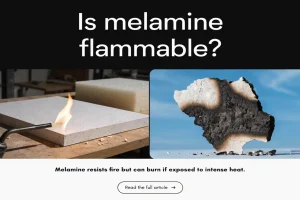
Is melamine flammable?
Tech Blog Is melamine flammable? “Is melamine flammable?” Many people mistakenly classify all plastic-like materials as flammable and worry about fire risks when using or
Epoxy resin (EP) is a high‑performance thermosetting polymer widely used for electrical encapsulation, structural composites, adhesives, and industrial coatings because of its outstanding mechanical strength, chemical resistance, and insulating properties. However, neat epoxy resin is highly flammable; it burns vigorously with molten dripping and releases large amounts of heat and toxic fumes, severely limiting its use in fire‑safety‑critical fields. Developing halogen‑free, sustainable intumescent flame‑retardant epoxy systems has therefore become a major research hotspot for material formulators.
Traditional intumescent flame‑retardant (IFR) formulations consist of three core components: an acid source, a blowing agent, and a carbon source. Ammonium polyphosphate (APP) acts as an acid source, and melamine powder serves as a nitrogen‑rich blowing agent. At the same time, pentaerythritol and other petroleum‑based polyols are normally used as char‑forming agents. To reduce dependence on fossil resources, researchers are exploring renewable biomass alternatives. Sodium alginate‑assisted intumescent flame‑retardant epoxy resin with ammonium polyphosphate and melamine offers a promising green solution. This article reviews formulation data, fire‑test performance, thermal‑stability results, char‑layer morphology and condensed‑phase synergistic mechanism of the APP/melamine/sodium alginate IFR‑EP composite, based on published lab research findings
Biomass sodium alginate can serve as an efficient condensed-phase synergistic char source for ammonium polyphosphate/melamine intumescent flame-retardant epoxy resin. At a low addition of only 0.4 wt %, the composite achieves LOI 27.2 % and UL‑94 V‑0 rating. TG and cone‑calorimeter results confirm higher char residue, reduced peak heat‑release rate and suppressed toxic‑gas emission. Sodium alginate cooperates with APP acid‑catalysis and melamine gas‑blowing effect to generate compact continuous intumescent char‑layer, delivering obvious fire‑safety promotion.
This research provides a feasible route for developing green, halogen‑free intumescent epoxy formulations using renewable marine‑biomass resources. In real‑world formulation development, formulators need to balance flame‑retardant efficiency, processing properties and mechanical performance of final epoxy‑based products.

Tech Blog Is melamine flammable? “Is melamine flammable?” Many people mistakenly classify all plastic-like materials as flammable and worry about fire risks when using or

Tech Blog Why can’t melamine be microwaved? If you use melamine tableware for home dining, school cafeterias, or restaurant service, you have likely seen the
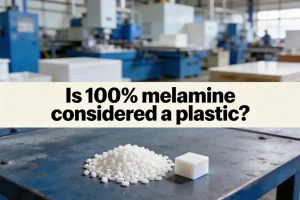
Tech Blog Is 100% Melamine Considered a Plastic? Shoppers, tableware buyers, and material engineers often ask a critical question: Is 100% melamine considered a plastic?

JINGJIANG MELAMINE POWDER
© JINJIANG MELAMINE