jinjiang melamine

Tech Blog

How Melamine Powder Impacts Your Life?

In 2008, the Chinese dairy industry was plunged into a crisis of trust due to the illegal addition of melamine to milk products. Since then, this chemical material has been synonymous with “tainted milk powder.” However, melamine is not inherently a food additive but rather an organic chemical intermediate widely used in industrial fields. From construction materials to daily necessities, from fire safety to environmental protection technologies, the industrial value of melamine far exceeds public perception. This article will delve into its core applications, restoring the image of this “misunderstood chemical material” and revealing how it silently supports modern life.

The Industrial Essence of Melamine: A "Versatile Intermediate" with High Nitrogen Content

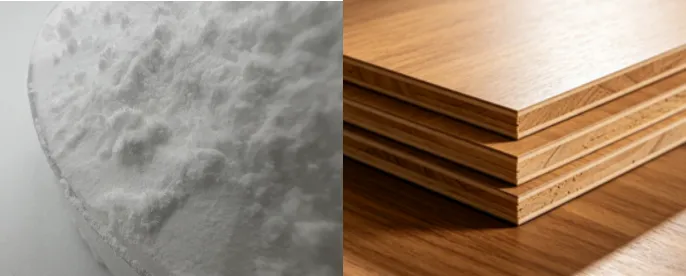
Melamine powder (chemical formula C₃H₆N₆) is a nitrogen-containing heterocyclic organic compound with a nitrogen content of 66.7% in its molecular structure, significantly higher than that of ordinary proteins (about 16%). This characteristic makes it a “golden supporting actor” in the chemical industry. Its core industrial value lies in two main directions:

1.Resin Synthesis: The melamine-formaldehyde resin (MF) formed by condensation with formaldehyde exhibits properties such as high-temperature resistance, corrosion resistance, and strong insulation, making it a key raw material in the wood, plastic, and coating industries.

2. Functional Additives: As flame retardants, water reducers, formaldehyde scavengers, etc., melamine imparts special properties to materials through chemical modification.
As the world’s largest producer of melamine (accounting for 70% of globalproduction capacity), China’s industrial applications of melamine have penetrated into multiple sectors ofthe national economy.

Core Industrial Applications: The Invisible Support from Construction to Daily Life

Construction Materials: The Foundation of Fire Resistance and Durability

Melamine formaldehyde resin serves as an “invisible guardian” for fire-resistant materials in high-rise buildings. For example:

  1. Exterior Wall Insulation Panels: Traditional polystyrene foam is highly flammable, while insulation panels with melamine flame retardants rapidly carbonize upon exposure to fire, forming an insulating layer that prevents the spread of flames. Experiments conducted by the Sichuan Fire Research Institute of the Ministry of Public Security show that such materials can reduce the spread rate of building fires by 60%.
  2. Decorative Laminates: The interior decorative panels of aircraft and ships adopt a melamine resin lamination process, combining seismic resistance, heat resistance, and aesthetics. Data from an aviation materials company indicates that its produced laminates can withstand temperatures up to 180°C, far exceeding conventional materials.

Daily Necessities: The Guarantee of Safety and Quality

The chemical resistance of melamine resin makes it an ideal material for tableware and furniture:

  1. Melamine Tableware: Made from melamine-formaldehyde resin, imitation porcelain tableware is shatter-resistant, heat-resistant (withstanding 120°C hot oil), and complies with international food safety standards (such as EU EN71-3). The global market for melamine tableware has exceeded $5 billion, with China accounting for over 40%.
  2. Appliance Housings: The plastic housings of refrigerators, washing machines, and other appliances use melamine-reinforced materials, improving impact resistance by 30% and extending service life to over 15 years.

Industrial Additives: The "Magic Powder" for Performance Optimization

Through chemical modification, melamine plays a crucial role in multiple fields:

  1. Concrete Water Reducers: On construction sites, melamine-based water reducers can reduce water consumption by 30% while increasing concrete strength. Data from a large-scale infrastructure project shows that using this water reducer reduces concrete usage per building by 15% and lowers carbon emissions by 12%.
  2. Leather Tanning Agents: The condensation product of melamine and formaldehyde can replace traditional chrome tanning agents, reducing heavy metal pollution. Experiments by a leather company demonstrate that leather tanned with melamine reduces formaldehyde emissions by 80%, meeting the EU E0-level environmental standard.

Emerging Fields: Breakthroughs in Environmental Protection and Energy

The industrial applications of melamine powder are expanding into cutting-edge technologies:

  1. New Energy Battery Protection: Due to its sound-absorbing and heat-insulating properties, melamine foam is used in the protective systems of lithium-ion battery packs. Tests by a new energy vehicle manufacturer show that this material can reduce the temperature rise of battery packs by 40% during collision tests, significantly improving safety.
  2. Air Purification: Melamine-based formaldehyde scavengers can efficiently decompose indoor formaldehyde. Real-world tests by an environmental protection company show a 92% formaldehyde removal rate within 24 hours, far surpassing activated carbon adsorption technology.

From "Tainted Milk Powder" to an Industrial Pillar: Clarifying Misunderstandings and Industry Reflections

The “stigmatization” of melamine stems from the illegal addition incident in the dairy industry in 2008. At that time, unscrupulous individuals exploited a loophole in the Kjeldahl method for protein detection (which only measures nitrogen content) by adding melamine to artificially inflate protein indicators, resulting in thousands of infants developing kidney stones. This incident exposed three core issues:

  1. Defects in Detection Standards: The inability of the Kjeldahl method to distinguish nitrogen sources prompted the industry to adopt more precise amino acid analysis techniques.
  2. Regulatory Gaps: Before the incident, China’s protein standard for raw milk was 2.95 g/100g, higher than the international average (2.8 g/100g), indirectly incentivizing fraud.
  3. Distorted Market Signals: High standards forced companies to pursue “superficial data” rather than genuine quality, creating systemic risks.

After the incident, China revised the “National Food Safety Standard for Raw Milk”(GB 19301-2010), adjusting the protein standard to 2.8 g/100g and introducing graded management for bacterial counts, better aligning with market realities. Simultaneously, melamine detection became mandatory for dairy products, with limits set at 1 mg/kg for infant formula and 2.5 mg/kg for other food products, close to EU standards.

Future Prospects: Green Chemistry and Sustainable Applications

With growing environmental awareness, the melamine industry is exploring low-carbon pathways:

  1. Clean Production Technologies: China’s developed third-generation low-pressure phase quenching method enables single-line production capacities of 100,000 tons per year, reducing energy consumption by 20% and achieving zero wastewater discharge.
  2. Bio-based Alternatives: Some companies are developing green synthesis processes using urea as a raw material, reducing reliance on fossil fuels.
  3. Circular Economy: Melamine waste can be recycled for nitrogen fertilizer production. A pilot project by one company shows an 85% waste utilization rate, significantly lowering production costs.

conclusion-How Melamine Powder Impacts Your Life?

The industrial value of melamine powder is akin to nitrogen in the air—silent yet ubiquitous. From ensuring building safety to enhancing life quality, from driving new energy development to protecting environmental health, this “misunderstood chemical material” is reshaping modern life through technological innovation. In the future, with breakthroughs in green chemistry, melamine is expected to play an even greater role on a sustainable path, while public perception of it should shift from “fear” to “rationality”—after all, chemistry itself is not at fault; abuse is the real culprit.

Related Blogs

Jinjiang chemical

Contact Us to Start Your Business