jinjiang melamine

Tech Blog

How Melamine Is Used in Melamine Tableware

If you work with melamine or food-contact plastics, you already know that melamine has a complicated reputation. But when it comes to melamine tableware – often called “Meliware” or imitation porcelain – melamine is actually the star ingredient. This article walks you through how melamine works in tableware manufacturing, what makes the material so useful, how production really happens, and what safety standards actually say. If you’re sourcing or supplying these products, this is for you.

What Melamine Resin Really Is (It's Not Just Melamine)

Let’s clear this up first. The melamine that caused the 2008 food safety crisis is not the same thing as melamine‑formaldehyde resin.

Melamine‑formaldehyde resin (MF resin) is made by reacting melamine with formaldehyde. They go through a polycondensation reaction, and the result is a thermosetting polymer. The typical molar ratio of formaldehyde to melamine is between 2 and 3. First you get N‑methylol derivatives, then those condense into a linear resin. When that linear resin is cured under heat (around 130–150°C), it forms a 3D crosslinked network that won’t melt or dissolve again.

Once cured, MF resin is clear, stable in boiling water, and can take temperatures up to 150°C. It also has good mechanical strength, self‑extinguishing properties, and arc resistance. That’s exactly why it’s the go‑to material for durable tableware.

Why Melamine Tableware Performs So Well

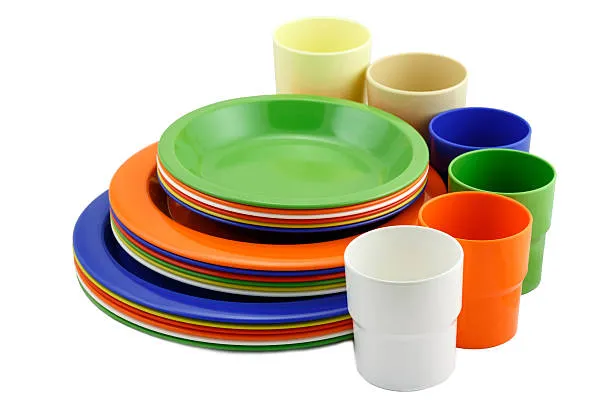
What Is Melamine Tableware

It’s really hard to break.Everyone knows melamine tableware doesn’t shatter like ceramic. That’s because the material is dense and rigid on the surface but tough underneath. It’s a huge selling point for restaurants, cafeterias, kindergartens, and homes with kids or elderly users.

It handles heat pretty well.Under normal use, high‑quality MF resin stays stable from room temperature up to about 120°C. Some premium grades go from -30°C to 120°C. The material doesn’t conduct heat quickly, so you can hold a bowl of hot soup without burning your fingers. And yes, it’s fine in dishwashers and disinfection cabinets.

It looks good and cleans easily.The surface is smooth, non‑absorbent, and stain‑resistant. Bacteria don’t have much to hold onto. The high‑gloss finish looks like ceramic, and you can get all kinds of colors and patterns. That’s a big plus for tabletop aesthetics.

It’s reusable, so it’s more eco‑friendly than disposables.Because it’s thermoset – once it’s shaped, it stays shaped – melamine tableware lasts a couple of years with normal use. That means less single‑use plastic waste, which matters more and more these days.

How It's Made: From Melamine Powder to Finished Tableware

The manufacturing process has several steps, and each one affects quality and safety.

Step 1 – Making the melamine resin powder.

Melamine and formaldehyde react in a controlled environment: temperature around 54–80°C, pH about 8.5. The reaction produces liquid MF resin, which is then spray‑dried into a powder. That powder (often called “melamine powder”) gets mixed with α‑cellulose as a filler, plus pigments and stabilizers.

Step 2 – Compression molding.

This is not injection molding. You preheat the melamine powder to soften it into a lump, then put that lump into a mold. The mold is heated above 130°C and put under high pressure. The resin cures and crosslinks, which drives free formaldehyde and free melamine down to very low levels.

Step 3 – Surface finishing.

After the basic shape is done, you apply decals if needed, then cure again under heat and pressure. A gloss powder is sprinkled on and fused to give that porcelain‑like shine. Finally, the edges are ground and polished so everything feels smooth.

Step 4 – Quality inspection.

There are both initial and final inspections. Defective pieces are pulled out before packaging.
A quick note on regulations: In China, the standard requires that imitation porcelain tableware be made from melamine resin (MF) with α‑cellulose as filler. No shortcuts allowed.
Safety: What the Standards Actually Say (and What You Need to Know)
Safety is the number one question, especially for B2B buyers. Here’s the real story.

Qualified melamine tableware is safe when used correctly. It has to meet GB 4806.7 (the national food safety standard for plastic food‑contact materials). That standard covers things like:

Sensory requirements
Overall migration limit
Potassium permanganate consumption
Heavy metals
Decolorization test

Specific migration limit for melamine: 2.5 mg/kg
Specific migration limit for formaldehyde: 15 mg/kg

For tableware meant for infants and young children, the melamine limit is even stricter – 1 mg/kg.

Why is this achievable? Because the high‑temperature, high‑pressure curing process locks most of the monomers into the polymer network. Only trace amounts can migrate.
But here’s the critical distinction – you must know the difference between MF (melamine resin) and UF (urea‑formaldehyde resin). Products marked MF are safe for food contact. Products marked UF are not. Unfortunately, some manufacturers cut costs by using UF or blended materials instead of real MF resin. Those cheap products can release formaldehyde and melamine when exposed to hot, acidic, or oily foods. That’s where real risks come from.

What to check when sourcing

Buy from reliable channels and known brands. Look for “MF” marking, the QS logo, or a clear “food contact” label.

The product label should show: product name, standard number, production date, specs, qualification mark, max temperature (usually 120°C), manufacturer info, and license number.

Good quality melamine tableware looks smooth and glossy, like ceramic, and feels somewhat heavy. If you see bubbles, whitish spots, cracks, color spots, or ripple marks, walk away.

Go for white or light‑colored items, especially if they’re for kids. Avoid heavy interior prints – that reduces potential heavy metal migration.

How to use it without problems

Never put melamine tableware in a microwave or conventional oven. Max service temperature is 120°C.Don’t leave very hot food, hot oil, or strongly acidic/oily dishes in contact for long periods.No steel wool. Clean with a soft sponge or cloth and mild detergent.Replace when you see deep scratches, cracks, deformation, yellowing, or blackening.Avoid sudden temperature shocks – hot to cold quickly can cause cracking.

Market Outlook and Final Thoughts

Melamine tableware is lightweight, break‑resistant, good‑looking, and easy to clean. That’s why it’s everywhere – homes, fast‑food chains, hotels, airlines. In 2024, the global market was about US$1.58 billion, with China around RMB 4.12 billion. It’s a steady, growing business.

With the push to reduce single‑use plastics, reusable melamine tableware has a clear advantage. It’s not going away.

Melamine‑formaldehyde resin – made from melamine and formaldehyde through a controlled polymerization – is a stable, safe polymer when produced correctly. As long as you buy from compliant manufacturers and your customers use the products properly, melamine tableware is a practical, cost‑effective choice.

We hope this guide helps you understand the material better – so you can sell with confidence and use with safety.

Related Blogs

Jinjiang chemical

Contact Us to Start Your Business