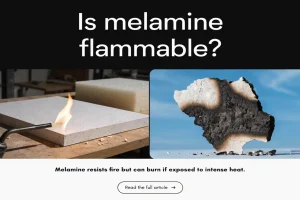

Is melamine flammable?
Tech Blog Is melamine flammable? “Is melamine flammable?” Many people mistakenly classify all plastic-like materials as flammable and worry about fire risks when using or

Melamine powder, an industrial chemical with high nitrogen content, is illegally added to dairy products to falsify protein levels, leading to severe health hazards such as kidney stones and urinary system damage. This article details the principles, optimal conditions, step-by-step procedures, and practical applications of AuNPs-based colorimetry for food safety inspectors, laboratory technicians, and dairy industry quality controllers.
Against the backdrop of increasing food safety concerns, colorimetry addresses the critical gaps of traditional methods:
These strengths make colorimetry an ideal choice for rapid melamine screening in resource-constrained settings or large-scale quality control.
Colorimetry relies on the interaction between AuNPs, Tₙ DNA, and melamine powder, with optical changes driving qualitative and quantitative detection.
To ensure accuracy, sensitivity, and reproducibility, strict control of the following parameters is critical:
Linear Range: 0.2×10⁻⁷–10.0×10⁻⁷ mol/L (pure water), covering the melamine powder limits set by major countries (e.g., China’s 2.5 μmol/kg for dairy products).
Q1: Can this method detect melamine in non-dairy foods (e.g., soy milk, eggs, processed snacks)?
A1: Yes. For plant-based proteins (e.g., soy milk), follow the same pretreatment as milk to remove proteins and fats. For eggs, dilute 1 mL of egg liquid with 9 mL of ultrapure water, centrifuge at 10,000 rpm for 15 minutes to remove yolk lipids, and test the supernatant. For processed snacks (e.g., milk-containing biscuits), crush 1 g of sample, extract with 5 mL of ultrapure water under sonication for 10 minutes, centrifuge, and use the supernatant for detection.
Q2: How to reduce interference from high-amine foods (e.g., fermented dairy products, soy sauce)?
A2: Two effective strategies: 1) Dilute the sample 1:2 with ultrapure water to lower the concentration of interfering amines below the threshold (10 μmol/L); 2) Add 0.05% bovine serum albumin (BSA) to the reaction system to block non-specific binding between amines and T₁₀ DNA, without affecting melamine detection.
Q3: Is the colorimetric method cost-effective for large-scale testing?
A3: Extremely cost-effective. The key reagents (AuNPs, T₁₀ DNA, NaCl) cost approximately $5–10 per 100 tests. A portable UV-Vis spectrophotometer (priced at $1,000–$5,000) is far more affordable than HPLC ($50,000+) or GC-MS ($100,000+). For basic qualitative screening, no instrument is needed—naked-eye observation suffices, further reducing costs.
Q4: How to store prepared AuNPs and reagents to ensure stability?
A4: – AuNPs solution: Store in a brown bottle at 4℃, avoid light and temperature fluctuations. Use within 2–4 weeks; discard if the solution turns purple or precipitates.
Colorimetric detection of melamine is a breakthrough in rapid melamine detection, combining simplicity, cost-effectiveness, and sensitivity. Its core advantages—visual readability, <30-minute detection time, and compliance with international safety standards—address the critical needs of on-site screening and large-scale quality control. By leveraging the specific binding between melamine and T₁₀ DNA and the optical properties of AuNPs, the method eliminates the limitations of traditional instruments and provides a reliable tool for food safety monitoring.
For food safety inspectors, dairy manufacturers, and laboratory technicians, colorimetry is the ideal choice for rapid, preliminary melamine screening. As food safety regulations continue to tighten globally, this method will play an increasingly important role in protecting consumers from adulterated products and safeguarding the integrity of the food industry.
Tech Blog Is melamine flammable? “Is melamine flammable?” Many people mistakenly classify all plastic-like materials as flammable and worry about fire risks when using or

Tech Blog Why can’t melamine be microwaved? If you use melamine tableware for home dining, school cafeterias, or restaurant service, you have likely seen the
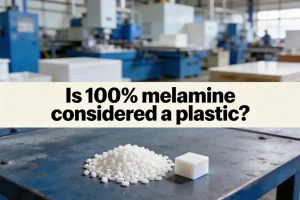
Tech Blog Is 100% Melamine Considered a Plastic? Shoppers, tableware buyers, and material engineers often ask a critical question: Is 100% melamine considered a plastic?

JINGJIANG MELAMINE POWDER
© JINJIANG MELAMINE