jinjiang melamine

Tech Blog

Is melamine flammable?

“Is melamine flammable?” Many people mistakenly classify all plastic-like materials as flammable and worry about fire risks when using or storing melamine tableware, melamine powder, and melamine decorative panels. Based on official SDS data and international chemical standards, this article clarifies the flammability of melamine monomer and cured melamine-formaldehyde products, explains its unique flame-retardant mechanism, and outlines fire safety guidelines for daily use and industrial production.

Is Melamine Flammable?

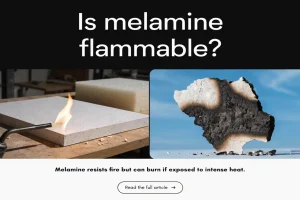
Pure melamine powder and finished cured melamine products are non-flammable. According to global authoritative safety data sheets (SDS) and CLP/GHS hazard classification standards, melamine is not classified as a flammable solid, flammable powder, or explosive material.

Unlike ordinary PP, PE, and ABS plastics, which burn rapidly and drip when exposed to fire, melamine-based materials have excellent inherent flame resistance, making them widely used in fire-retardant industrial materials and safe daily tableware.

Authoritative Flammability Parameter Data

The fire safety indicators of melamine fully confirm its non-flammable characteristics, with all key parameters far exceeding daily fire temperatures:

  • Flammability classification: Non-flammable solid (GHS standard)
  • Flash point: > 280°C (no flash ignition risk under normal conditions)
  • Auto-ignition temperature: > 500°C (extremely high auto-ignition threshold)
  • Decomposition temperature: Starts to decompose above 280°C; no melting or burning process
  • Explosion limit: No explosion risk under conventional storage and usage scenarios

Under normal room temperature and daily fire scenarios, melamine will not ignite, spread flames, or produce burning droplets.

Why Is Melamine Non-Flammable & Flame-Retardant?

The fire-resistant advantage of melamine comes from its unique molecular structure, which is an innate chemical property rather than a post-added flame retardant:

Ultra-High Nitrogen Molecular Structure

Melamine’s molecular formula, C₃H₆N₆, contains about 67% high-purity nitrogen by mass. High nitrogen content can isolate oxygen during high-temperature combustion, inhibit flame propagation, and achieve a self-extinguishing effect.

Stable Triazine Ring Skeleton

Melamine has a rigid triazine ring organic structure with extremely high thermal stability. It does not crack or burn easily when heated, and only slowly decomposes at ultra-high temperatures above 280°C.

Thermoset Cured Carbonization Layer

Cured melamine-formaldehyde (MF) resin forms a dense, carbonized protective layer on the surface when exposed to high temperatures. This layer blocks heat and oxygen transfer, preventing further combustion of internal materials and providing excellent self-extinguishing performance.

Melamine Powder vs Finished Melamine Ware: Flammability Difference

Although both are non-flammable, there are subtle safety differences in industrial scenarios:

Pure Melamine Powder

Pure melamine powder is non-flammable, non-explosive, and safe for conventional sealed storage. Only ultra-fine floating dust in high-concentration, closed industrial spaces poses an extremely low dust-explosion risk (strict industrial ventilation can eliminate it), and it is not flammable.

Cured Melamine Tableware & MF Products

Fully molded and cured melamine tableware, decorative laminates, and electrical parts have the best fire resistance. They will not burn or deform in daily open flames, only slightly carbonizing and discoloring at ultra-high temperatures.

High-Temperature Decomposition Hazards

Although melamine is non-flammable, long-term ultra-high-temperature heating above 300°C will cause thermal decomposition and produce harmful by-products, which is the core safety risk of melamine in fire scenarios:

  • Decomposition products: Ammonia, nitrogen oxides (NOx), trace hydrogen cyanide at temperatures above 600°C;
  • Hazard description: The material itself does not burn, but high-temperature pyrolysis produces irritating and toxic fumes;
  • Fire disposal suggestion: Use dry powder, CO₂ extinguisher, or water spray to cool down and suppress smoke during fire rescue.

Fire Safety Advantages of Melamine Materials

Due to their non-flammable and flame-retardant properties, melamine materials are widely used in high-standard fire-resistant scenarios:

  • Fire-resistant decorative laminates for furniture and building panels;
  • Flame-retardant additives for plastics, coatings and building materials;
  • High-safety insulating parts for electrical and electronic equipment;
  • Safe shatterproof tableware for schools, kindergartens and catering venues.

FAQs

Q1: Is melamine flammable?

No, melamine is non-flammable. Authoritative SDS and GHS classification confirm melamine has no flammable or explosive hazards, with ultra-high ignition and decomposition temperatures and excellent self-extinguishing performance.

Q2: Does melamine burn in fire?

Melamine will not burn or spread open flames in conventional fire scenarios. It only undergoes surface carbonization and thermal decomposition at ultra-high temperatures above 280°C and self-extinguishes after the fire source is removed.

Q3: Is melamine powder explosive?

Pure melamine powder is non-flammable and non-explosive. Only high-concentration floating dust in closed industrial environments poses a negligible dust-explosion risk, which does not affect daily storage and use.

Q4: Is melamine tableware fire safe?

Yes. Melamine tableware has good fire resistance, will not burn or melt when encountering open fire, and is safer than ordinary plastic tableware in high-temperature and fire scenarios.

Q5: What toxic substances does melamine produce in fire?

At ultra-high temperatures above 600°C, it decomposes to produce ammonia, nitrogen oxides, and trace toxic fumes. Therefore, avoid long-term high-temperature baking of melamine products and evacuate promptly in fire scenarios.

conclusion

To answer the core question: Is melamine flammable? Both pure melamine monomer powder and cured melamine-formaldehyde finished products are non-flammable materials recognized by international chemical safety standards. Its high-nitrogen molecular structure and stable triazine ring give it inherent flame retardancy and self-extinguishing properties, making it far safer than ordinary flammable plastics.

While melamine reduces flammability risks, be mindful of toxic fume hazards from high-temperature pyrolysis in extreme fire environments. Overall, melamine materials are safe, fire-resistant choices for tableware, building decoration, and industrial support applications.

Related Blogs

Is melamine flammable?
Jinjiang

Is melamine flammable?

Tech Blog Is melamine flammable? “Is melamine flammable?” Many people mistakenly classify all plastic-like materials as flammable and worry about fire risks when using or

Read More »

Jinjiang chemical

Contact Us to Start Your Business