
Is melamine flammable?
Tech Blog Is melamine flammable? “Is melamine flammable?” Many people mistakenly classify all plastic-like materials as flammable and worry about fire risks when using or

Shoppers, tableware buyers, and material engineers often ask a critical question: Is 100% melamine considered a plastic? The confusion comes from two different definitions: pure melamine as a chemical monomer and finished 100% melamine-formaldehyde molded products. The short answer is clear: Pure melamine powder is not plastic, but 100% cured melamine-formaldehyde material is classified as a high-performance thermoset plastic.
This article breaks down the scientific classification, key differences between melamine monomer and melamine plastic, thermoset vs thermoplastic traits, and industry standards to eliminate all common misunderstandings.
To avoid ambiguous answers, we split the definition into two precise industry categories:
100% pure melamine monomer (CAS 108-78-1): NOT plastic. It is a small-molecule organic crystalline chemical compound, a synthetic chemical intermediate, with no polymer structure and no plastic properties.
100% melamine-formaldehyde (MF) cured material: YES, it is plastic. It belongs to the thermosetting plastic family and is widely recognized in materials science and industrial classification as a formaldehyde-based amino plastic.
When manufacturers or sellers mention “100% melamine tableware”, they refer to products made of a 100% food-grade melamine-formaldehyde resin system (pure MMC formula), not raw melamine monomer powder.
Plastics are defined as high-molecular-weight polymer materials with moldable and deformable properties under heating or pressure. Pure Melamine fails this definition completely:
In short: Pure Melamine is the chemical raw material for making melamine plastic, not plastic itself.
After Melamine reacts with formaldehyde and undergoes high-temperature compression curing, the finished 100% melamine-based material fully meets the scientific definition of plastic:
Industry and academic classifications uniformly define melamine-formaldehyde (MF) resin as an amino thermosetting plastic, alongside urea-formaldehyde (UF) plastic.
Feature | 100% Melamine (Thermoset Plastic) | Ordinary Plastics (PP/PE/PET Thermoplastic) |
|---|---|---|
Heating performance | Cures permanently, cannot melt or remold | Melts repeatedly, can be reshaped multiple times |
Surface hardness | High hardness, scratch-resistant, porcelain-like texture | Soft surface, easy to scratch and deform |
Heat resistance | Up to 120°C, good thermal stability | Low heat resistance, easy to soften with heat |
Microwave safe | No | Some food-grade thermoplastics are microwave-safe |
Recycling method | Cannot be thermally recycled | Remeltable and recyclable |
In the tableware industry, “100% melamine” is a commercial standard: 100% food-grade melamine-formaldehyde molding compound (A5 MMC) with no urea-formaldehyde (UMC) adulteration, no recycled materials, and no inferior fillers.
This does not mean pure melamine monomer powder. Qualified 100% melamine products contain scientifically matched food-grade cellulose fillers and safe additives to enhance toughness, meeting FDA and EU 10/2011 food contact standards.
A cured 100% melamine-formaldehyde product is a thermosetting plastic. Pure melamine monomer powder is a chemical compound, not a plastic.
Melamine-formaldehyde material is a thermosetting plastic. Once cured and molded, it cannot melt or be reshaped again.
Yes. A5-grade 100% melamine tableware is a safe food-contact thermoset plastic when fully cured and complies with global food safety regulations. Avoid high-temperature heating and microwave use.
Yes. Melamine thermoset plastic has higher surface hardness, better stain resistance, greater durability, and more stable chemical properties than ordinary thermoplastic tableware.
To answer the core question: Is 100% melamine considered a plastic? The key lies in material form. Pure melamine monomer is an organic chemical compound, not plastic. However, 100% melamine-formaldehyde cured products (commercial 100% melamine tableware and industrial parts) are standard high-performance thermosetting plastics.
Unlike common disposable thermoplastics, melamine plastic cures permanently and offers excellent hardness and shatter resistance. Understanding this classification helps buyers distinguish genuine 100% melamine products from fake urea-based plastic alternatives and choose compliant, high-quality materials.

Tech Blog Is melamine flammable? “Is melamine flammable?” Many people mistakenly classify all plastic-like materials as flammable and worry about fire risks when using or

Tech Blog Why can’t melamine be microwaved? If you use melamine tableware for home dining, school cafeterias, or restaurant service, you have likely seen the
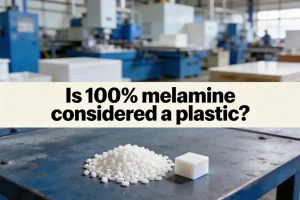
Tech Blog Is 100% Melamine Considered a Plastic? Shoppers, tableware buyers, and material engineers often ask a critical question: Is 100% melamine considered a plastic?

JINGJIANG MELAMINE POWDER
© JINJIANG MELAMINE