jinjiang melamine

Tech Blog

Which Compound Is Used for the Preparation of Melamine?

Melamine powder (chemical formula C₃H₆N₆, IUPAC: 1,3,5‑triazine‑2,4,6‑triamine) is a high‑nitrogen white crystalline intermediate, the building‑block for melamine‑formaldehyde (MF) resin, melamine moulding compound, laminates and melamine‑ware. So which compound is used for the preparation of melamine? 
Main Starting Compound for Melamine Manufacturing

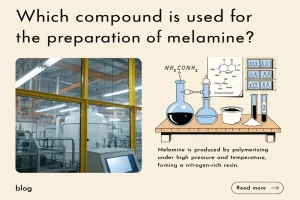
Urea (carbamide, chemical formula CO(NH₂)₂) is the primary industrial‑scale compound used for preparing melamine. Almost all modern commercial melamine plants use urea as feedstock, rather than formaldehyde. Formaldehyde reacts with finished melamine to produce MF resin, but formaldehyde does not make melamine monomer itself.

The overall endothermic chemical reaction for urea‑to‑melamine conversion:

6 CO(NH₂)₂ → C₃H₆N₆ + 6 NH₃ + 3 CO₂

Six moles of urea thermally decompose at high temperature, forming one mole of melamine, plus ammonia and carbon dioxide as recyclable by‑products. Many factories recycle ammonia‑rich tail gas back to urea synthesis units to improve circular‑economy efficiency.

Two Major Industrial Urea‑Based Production Routes

There are two well‑established technical routes using urea as feedstock, differing in pressure and catalyst setup:
  • High‑pressure non‑catalytic process: 7‑10 MPa pressure, 360‑420 °C, liquid‑phase reaction, no catalyst required. Molten urea is fed directly into high‑pressure reactors.
  • Low‑pressure catalytic gas‑phase process: ≤1 MPa, silica‑based catalyst, 350‑400 °C. Urea vapor decomposes over solid catalyst beds, widely adopted in many new‑generation melamine facilities.
After the reaction, crude melamine is quenched and purified by dissolution‑recrystallization to obtain high‑purity white crystalline melamine powder (typically≥99.8 % purity for resin‑grade applications). Historically, dicyandiamide routes existed, but they are economically obsolete for large‑volume global production today.

Critical Terminology Confusions to Avoid

Many buyers mix up melamine monomer, formaldehyde, melamine‑formaldehyde resin and melamine moulding compound. These are sequential downstream products, not raw materials for making melamine itself.
SubstanceRole
Urea CO(NH₂)₂
Starting compound for manufacturing melamine monomer
Melamine C₃H₆N₆Pure crystalline intermediate chemical made from urea
Formaldehyde HCHO
Reacts with melamine to synthesize melamine‑formaldehyde (MF) resin; cannot produce melamine monomer
MF resin (melamine‑formaldehyde)Condensation polymer: melamine + formaldehyde reaction product
Melamine moulding compound (MMC)Blended powder: MF resin + cellulose filler + pigments + curing agents, for compression‑molding melamine‑ware

What Happens After You Make Melamine from Urea?

Urea only yields melamine monomer. To get usable industrial materials, melamine further reacts with formaldehyde under controlled pH and temperature:
  1. High‑purity melamine reacts with formaldehyde for hydroxymethylation, producing melamine‑formaldehyde pre‑polymer (MF resin).
  2. For melamine moulding compound (MMC): blend MF resin with cellulose filler, pigment, internal lubricant and curing agent to make moulding powder.
  3. MMC powder is compression‑molded under heat and pressure (155‑175 °C, 15‑30 MPa) to make melamine tableware, electrical insulating parts, and decorative hardware.
Important note: Formaldehyde is used to make MF resin and moulding compound, but it is not the compound used to prepare melamine monomer raw material.

Quality Specifications for Industrial‑Grade Melamine

  • Appearance: White crystalline powder, free‑flowing
  • Purity: ≥99.8 % for resin‑grade melamine
  • Moisture: ≤0.1 %
  • Ash content: ≤0.03 %
  • Main end‑uses: MF resin synthesis, laminates, coating cross‑linkers, intumescent flame‑retardant formulations, melamine‑ware raw‑material feedstock.

FAQS

Q1: Which compound is used for the preparation of melamine?

Urea (carbamide, CO(NH₂)₂) is the primary industrial‑scale starting compound for melamine production. Formaldehyde reacts with melamine to make melamine‑formaldehyde resin, but formaldehyde cannot be used to prepare melamine monomer itself.

Q2: Is formaldehyde used to make melamine powder?

No. Formaldehyde reacts with ready‑made melamine monomer to produce MF resin. Manufacturers make melamine monomer from urea via high‑temperature thermal decomposition.

Q3: Can dicyandiamide produce melamine?

Lab‑scale or older processes used dicyandiamide, but it is too costly for modern large‑volume commercial melamine manufacturing; urea‑based routes dominate worldwide today.

Q4: What is the difference between melamine monomer and melamine moulding compound?

Melamine monomer is a pure crystalline chemical synthesized from urea. Melamine moulding compound (MMC) is a blended thermosetting powder made by reacting melamine with formaldehyde to form MF resin, plus fillers and additives for tableware compression-moulding.

Q5: What are the by‑products of urea‑based melamine synthesis?

Ammonia and carbon dioxide gas. Modern plants recover these by‑products and recycle them back into urea production to improve resource utilization and lower waste emissions.

conclusion

To answer the core question: Which compound is used for the preparation of melamine? Urea (carbamide, CO(NH₂)₂) is the dominant starting compound for global industrial melamine manufacturing. Under high‑temperature (and high‑pressure or catalytic gas‑phase) conditions, urea thermally decomposes and cyclizes to produce melamine crystalline powder, releasing recyclable ammonia and carbon‑dioxide by‑products.

Do not confuse melamine‑monomer synthesis with downstream resin‑making. Formaldehyde is introduced only in the next step to react with finished melamine to make melamine‑formaldehyde resin and melamine moulding compound; it does not create melamine itself. Understanding this raw‑material chain helps chemical purchasers and resin formulators evaluate supply‑chains, technical datasheets, and avoid common material‑terminology mix‑ups.

Related Blogs

Jinjiang chemical

Contact Us to Start Your Business