jinjiang melamine

Tech Blog

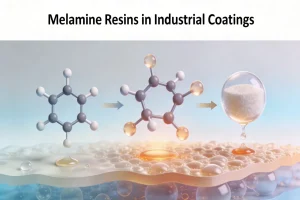
Melamine Resins in Industrial Coatings

Melamine resins—specifically methylated, butylated, and mixed-etherified melamine formaldehyde crosslinkers—serve as the essential curing agents in a wide range of industrial coating systems. When combined with hydroxyl-functional binder resins such as acrylics, polyesters, or epoxies, melamine crosslinkers undergo a thermal curing reaction to form a dense, three-dimensional polymer network. This network structure is responsible for the superior mechanical strength, chemical resistance, and adhesion properties that industrial coatings demand.

The chemistry is relatively straightforward: melamine is first reacted with formaldehyde to form methylolmelamine compounds. These are then etherified with alcohols (methanol, butanol, or mixtures thereof) to produce resins with varying degrees of alkylation, etherification, and imino functionality. Fully etherified resins offer excellent compatibility with non-polar solvents and superior flexibility; partially etherified and high-imino resins provide faster curing and better water solubility, making them ideal for waterborne formulations.

For coating formulators, the choice of melamine resin grade directly impacts cure temperature, film hardness, gloss retention, weatherability, chemical resistance, and VOC content. Understanding these trade-offs—and the ability of modern high-solids melamine resins to deliver superior performance while reducing solvent content—is critical to meeting both technical specifications and environmental mandates.

Performance Advantage: Hardness, Gloss, Weathering and Corrosion Resistance

Industrial end-users specify melamine crosslinkers for a simple reason: no other amino resin delivers the same combination of hardness, gloss retention, and chemical resilience.

Hardness and scratch resistance. Melamine-cured films crosslink extensively, resulting in high pencil hardness (typically 3H to 4H) that resists marring in high-traffic applications such as appliance exteriors and automotive bodies.
Gloss retention. Melamine crosslinkers support the formulation of high-gloss topcoats with exceptional distinctness of image (DOI), while maintaining gloss levels even after years of UV exposure. In automotive clearcoats, this translates into showroom-like finish over the vehicle’s service life.

Corrosion and chemical resistance. The dense polymeric barrier formed by melamine crosslinking imparts outstanding resistance to salt spray, humidity, acids, alkalis, and common household cleaning agents. For automotive e-coat applications, melamine crosslinkers can help achieve more than 1,000 hours of salt spray resistance while delivering film hardness of 4H.

Quantitative performance benchmarks for melamine-crosslinked industrial coatings are as follows. Pencil hardness typically reaches 3H to 4H, as seen in automotive clearcoats and appliance topcoats. Salt spray resistance can exceed 1,000 hours, which is standard for automotive e-coat and industrial primers. Gloss retention after 1,000 hours of QUV accelerated weathering is typically above 90% for coil coating topcoats and automotive basecoats. MEK double rub resistance (a measure of solvent and cure robustness) often exceeds 200 rubs for industrial bake finishes. These values vary by formulation and curing conditions but illustrate the performance ceiling achievable with quality melamine crosslinkers.

These performance characteristics also extend to coil coatings. In coil coating applications, the melamine resin ensures that the coating can withstand the severe stresses of bending, stamping, and forming operations without cracking or peeling—a critical requirement for pre-painted metal destined for building panels, roofing, and appliances.

Low-VOC and High-Solid Solutions: Meeting Global Regulatory Standards

Environmental regulations are fundamentally reshaping industrial coating technologies. Globally, tightening VOC limits—such as REACH in Europe, EPA rules in the United States, EPA Method 24-style measurement protocols, and China’s new GB 30981.2-2025 standard (effective June 1, 2026)—are driving a broad transition away from traditional solvent-borne systems toward waterborne, powder, and high-solids alternatives.

Melamine crosslinkers, critically, have evolved alongside this regulatory push. Traditional fully butylated resins have given way to methylated and mixed-alkylated grades specifically engineered to reduce VOC content while maintaining or improving performance.
High-solids melamine resins deliver solid contents of 70% or higher in solvent-borne systems, drastically reducing the amount of volatile organic solvent required for application.
Waterborne melamine resins are completely aqueous, containing zero solvent. These systems cure at lower temperatures (as low as 110–130°C / 230–266°F) without the need for an added catalyst, while still providing excellent crosslinking density and film integrity.

Low-formaldehyde and formaldehyde-reduced grades are now available, with free formaldehyde content of 0.5% or less for high-imino methylated resins, supporting compliance with stringent indoor air quality standards such as California’s CARB Phase II and the EU’s updated REACH formaldehyde limits (0.062 mg/m³ effective August 2026 for wood panels; similar downward pressures apply to coatings in occupied spaces).

Practical examples of low-VOC crosslinkers: allnex’s CYMEL 250 resin—a mixed-alkylated methylated and n-butylated melamine formaldehyde resin with high imino functionality—is designed specifically for automotive coating systems. Formulations using CYMEL 250 achieve significantly lower VOC than conventional n-butylated melamine resins, with fast low-temperature cure response (catalysis effective at baking temperatures above 120°C) and superior humidity and water resistance.

Another example, CYMEL 1161—a highly monomeric, methylated/iso-butylated melamine crosslinker with a high degree of alkylation—enables formulators to create high-solids coatings with excellent appearance, recoat adhesion, and flexibility, recommended for automotive topcoats, general metal finishes, and coil coatings. For solventless high-build and waterborne systems, advanced methylated melamine crosslinkers (e.g., Haminol 303G) offer ultra-high non-volatile content (98% or higher) with negligible formaldehyde emissions (below 0.01%).

Failing to transition to compliant formulations carries tangible risks: non-compliant products may be barred from key jurisdictions or become liabilities under expanding extended producer responsibility regimes. Coating manufacturers that adopt low-VOC melamine crosslinkers early gain first-mover advantage—access to premium markets, reduced regulatory compliance costs, and enhanced brand positioning as sustainability leaders.

Application Spotlight 1: Automotive Paints—From E-Coat to Topcoat

The automotive industry is the largest single market for melamine crosslinkers in industrial coatings, with applications spanning multiple layers of the vehicle finishing system.

E-coat (cathodic electrodeposition primer). This first layer of corrosion protection relies on melamine crosslinkers to achieve maximum durability. High-imino methylated melamine resins—such as YDN535—are formulated specifically for automotive e-coat applications, providing low free formaldehyde (0.5% or less), fast curing (120–150°C), high crosslinking efficiency, and dense film formation. These products support more than 1,000 hours of salt spray resistance and meet the stringent standards of OEM manufacturers.

Primer surfacers. Melamine crosslinked primers fill surface imperfections and provide adhesion for subsequent layers, with grades like CYMEL 250 recommended for use.
Color basecoats. High-gloss, pigment-packing efficiency is achieved with melamine crosslinkers that balance flow and leveling with rapid cure.

Clear topcoats. Melamine-modified clearcoats deliver the gloss, DOI, UV resistance, and scratch resistance that define premium automotive finishes. Specialized grades like CYMEL 1161 are especially recommended for this application.

For coating manufacturers supplying the automotive aftermarket, high-solids melamine crosslinkers enable the formulation of low-VOC refinish paints that cure at lower temperatures, reducing energy costs for body shops while meeting increasingly stringent regional emissions standards. The methyl etherified melamine resin market is projected to grow steadily through 2034, with the coating and painting segment expected to hold the largest share, driven by automotive, construction, and electronics applications.

Application Spotlight 2: Coil Coatings—Durable Finishes for Pre-Painted Metal

Coil coating—a continuous process in which metal coils are cleaned, pre-treated, coated, and cured before being slit and formed into final products—demands coatings that can survive rigorous deformation without failure while providing decades of weatherable service.

Melamine crosslinkers are uniquely suited to this challenge. The crosslinked film must remain intact after the coated metal is bent, stamped, drawn, or roll-formed into building cladding, roofing, garage doors, and automotive parts. In coil coating applications, the melamine resin ensures that the coating can withstand the stresses of bending, stamping, and forming without cracking or peeling.

Major global coating suppliers have developed comprehensive low-VOC portfolios for coil applications. allnex offers waterborne primers, monocoats, and topcoats alongside high-solids resilient solvent-borne systems. Ydnresin’s high-solid melamine resins provide low formaldehyde release, low odor, ideal performance for coil and appliance finishes, and compatibility with a wide range of resin systems. Advanced methylated melamine crosslinkers (e.g., Haminol 303G) support zero-solvent, ultra-low VOC coil coating systems. Additional coil coating-specific MF and methylated melamine formaldehyde resins are available from suppliers such as Prefere Resins (Resimene CE-7103).

For construction and building product manufacturers, coil-coated metal panels finished with melamine crosslinked systems offer the dual benefits of durability (25+ year warranty intervals are common) and aesthetic flexibility (a full spectrum of colors and gloss levels). As green building certifications such as LEED and BREEAM gain traction, low-VOC coil coatings are becoming a specification requirement rather than an optional upgrade.

Application Spotlight 3: Appliance Finishes—Kitchen Durability That Lasts

Household appliances—refrigerators, ovens, dishwashers, washing machines—operate in demanding environments where heat, moisture, cleaning chemicals, and daily handling stress coatings continuously. Melamine crosslinkers are a standard component of appliance finishes, delivering:

  • Heat resistance: Oven exterior coatings must withstand high temperatures without discoloration.
  • Chemical resistance: Kitchen countertop appliances encounter cleaning agents, oils, and acids that degrade lesser coatings.
  • Scratch and mar resistance: Daily contact with utensils, appliances moved for cleaning, and cross-contact in kitchen cabinets all demand durable finishes.

Butylated melamine formaldehyde resins—such as MF-268—are specifically recommended for stoving finishes for kitchen appliances, automotive applications, and strip and roller coating enamels, combining excellent reactivity with superior color retention. High-solids MF resins also serve appliance finishes requiring flexibility and low VOC profiles.

For appliance manufacturers, switching to low-VOC melamine crosslinkers offers clear economic benefits: compliance without reformulation penalties, reduced solvent handling costs, and a marketing advantage in increasingly eco-conscious consumer markets where “low-VOC” or “indoor air safe” labeling creates differentiation. Data on regulatory compliance—upcoming VOC thresholds in China (GB 30981.2-2025) and similar regional standards—is increasingly incorporated into appliance energy and emissions ratings, tying coating choice directly to market access.

Melamine crosslinker selection guide by application: For automotive e-coat, high-imino methylated resins are recommended, offering fast cure, free formaldehyde content ≤0.5%, and salt spray resistance exceeding 1,000 hours. For automotive topcoats, highly alkylated or methylated resins provide high gloss, flexibility, and low VOC. For coil coatings, butylated and methylated blends are preferred for formability, weatherability, and low formaldehyde release. For appliance finishes, butylated resins are typically specified for heat resistance, color retention, and chemical durability.

Market Outlook and Sourcing Advice for Coating Manufacturers

The market for melamine crosslinkers and downstream MF resins is poised for significant growth. The global methylated melamine resin market alone was valued at USD 2.1 billion in 2024 and is projected to reach USD 2.5 billion by 2030 at a 3.2% CAGR. Within this segment, methyl etherified melamine resin—critical for high-performance coating applications—is expected to increase from USD 167 million in 2024 to USD 224 million by 2031, representing a 4.6% CAGR. Amino resins, of which MF and MUF are core constituents, are forecast to grow from USD 18.73 billion in 2025 to USD 23.25 billion by 2030 at a CAGR of 5.55%.

Key trends shaping procurement to 2030: Continued tightening of VOC regulations will accelerate shift to waterborne and high-solids formulations. Bio-based and formaldehyde-free alternatives—such as glyoxal-based MF resins—are emerging but not yet cost-competitive at industrial scale. Localization of melamine resin production is accelerating; China’s significant R&D investments, including breakthroughs in etherified melamine resin synthesis and production lines (e.g., 5,000 tons/year manufacturing), are reducing reliance on imported crosslinkers and improving cost competitiveness. Quality differentiation is widening: premium markets demand high-spec, low-VOC, low-formaldehyde grades, while commodity markets continue to absorb standard resins.

Advice for coating manufacturers sourcing melamine crosslinkers:

  • Specify for both current regulations and anticipated changes. When choosing low-VOC grades, evaluate not just compliance with today’s limits but also the regulatory trajectory (e.g., likely further reductions in formaldehyde limits in the EU by 2030).
  • Test for application-specific performance. Generic “low-VOC” labeling is insufficient for rigorous industrial use. Validate hardness (pencil or Koenig), salt spray resistance (ASTM B117), MEK double rubs, gloss retention, and flexibility (mandrel bend) before bulk ordering.
  • Build a dual-sourcing strategy. Even if your primary preference is for a specific grade from a particular supplier, maintaining a qualified backup supplier (including regional options in India, Vietnam, or Europe) provides negotiation leverage and supply-chain resilience.
  • Prioritize suppliers with integrated production. Integrated producers controlling raw materials (urea, formaldehyde) and the resin manufacturing process tend to offer superior quality consistency and pricing stability.
  • Monitor evolving sustainability standards. For export-oriented coating manufacturers, REACH compliance is non-negotiable for EU markets, while RoHS and emerging US EPA requirements matter for North American buyers. Using low-VOC melamine crosslinkers that already meet future standards protects you from reformulation costs when regulations tighten.

Melamine resins remain the industry benchmark for high-performance industrial coatings. For coating manufacturers, R&D teams, and procurement professionals, the message is clear: transitioning to low-VOC melamine crosslinkers is not merely about regulatory compliance—it is a strategic advantage that aligns product quality, environmental responsibility, and long-term market competitiveness.

Related Blogs

Jinjiang chemical

Contact Us to Start Your Business