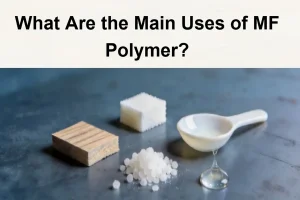

What Are the Main Uses of MF Polymer?
Tech Blog What Are the Main Uses of MF Polymer? If you work in wood‑based panel manufacturing, coatings formulation, plastic compounding or material procurement, you

Urea formaldehyde resin (UF resin) is the dominant adhesive and coating material for plywood, MDF, and solid wood furniture due to its low cost, high bonding strength, and easy curing. However, both pure UF resin and uncoated natural wood are highly flammable, creating severe fire hazards in furniture factories, indoor buildings and wooden construction projects. Traditional halogen flame retardants release toxic dioxins during combustion and are now globally restricted; petroleum-based triphenyl phosphate (TPP) suffers high cost, poor compatibility and weak smoke suppression performance.
Biomass phytic acid extracted from rice bran features ultra-high phosphorus content (27.3%) and can combine with nitrogen-rich biomass (chitosan, guanazole, melamine) and carbon source lignin to form phosphorus-nitrogen synergistic intumescent flame retardants. This study systematically develops three phytic acid-based flame retardants: PCS (phytic acid-chitosan), PGL (phytic acid-guanazole-lignin), and PM (phytic acid-melamine polyelectrolyte).
Each is applied to modify UF resin adhesives and waterborne wood coatings, with full characterization of thermal stability, UL-94 vertical combustion, LOI, cone calorimeter data, mechanical properties, and flame retardant mechanisms. This article delivers scalable green flame retardant formulas for wood adhesive and coating manufacturers.
| Flame Retardant Type | Core Advantages | Best Application | Optimal Dosage |
| PCS (Phytic acid-Chitosan) | Highest LOI (36), minimal impact on adhesive toughness | UF plywood/MDF flame retardant adhesive | 1 wt% of total resin mass |
| PGL (Phytic acid-Guanazole-Lignin) | Plasticizing, low dosage equivalent to TPP, waste lignin raw material | Indoor wood furniture flame retardant coating | 3 wt% based on urea |
| PM (Melamine Phytate) | Dual curing + flame retardant, halogen-free, wood coloring | Low-toxic environmental wood paint | 1.5–2 wt% curing replacement |
Tech Blog What Are the Main Uses of MF Polymer? If you work in wood‑based panel manufacturing, coatings formulation, plastic compounding or material procurement, you
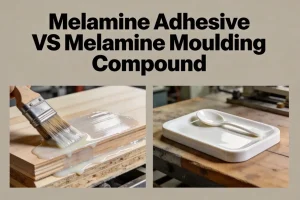
Tech Blog Melamine Adhesive VS Melamine Moulding Compound In the world of MF resins, there are two products that look similar but are fundamentally different:
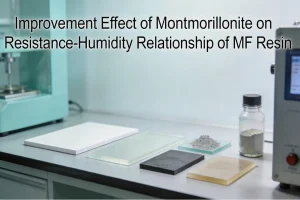
Tech Blog Improvement Effect of Montmorillonite on Resistance-Humidity Relationship of MF Resin Melamine formaldehyde resin (MF resin) is a well‑known thermosetting polymer used widely in

JINGJIANG MELAMINE POWDER
© JINJIANG MELAMINE