What is the raw material of urea formaldehyde?
Tech Blog What is the raw material of urea formaldehyde? Unlike natural materials, urea formaldehyde is purely synthetic, and its performance and safety depend directly
Wood dust generated from sawing, sanding, and milling plywood, particleboard, and MDF ranks as the second most frequent combustible dust explosion hazard in industrial facilities, only behind metal dust disasters. Over 80% of global wood composite panels use urea formaldehyde resin (UF resin) as a bonding agent, so nearly all workshop dust carries residual UF adhesive particles.
Most prior dust explosion research focused on pure wood fiber dust, with little data covering UF-contaminated wood dust. This guide breaks down authoritative 20L sphere & Hartmann tube test data comparing UF-bonded wood dust (Sample A) vs pure, glue-free wood dust (Sample B), analyzes the explosion suppression effect of UF resin, and delivers factory-ready safety compliance solutions aligned with NFPA 664 & GB/T dust testing standards.
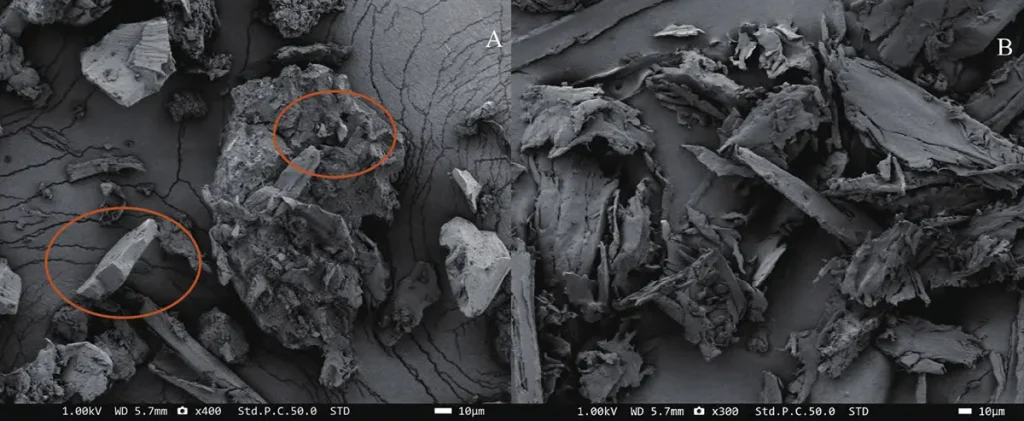
SEM imaging confirms UF resin forms rough agglomerate coatings on Sample A wood particles, creating physical barriers between fiber and oxygen.
Maximum explosion pressure (Pmax)
Maximum pressure rise rate (dp/dt max)
Explosion Index Kst (all samples fall into St1 weak explosive grade, 0 < Kst ≤ 20 MPa·m/s)

Tech Blog What is the raw material of urea formaldehyde? Unlike natural materials, urea formaldehyde is purely synthetic, and its performance and safety depend directly

Tech Blog Is urea formaldehyde synthetic or natural? Due to the widespread use of urea formaldehyde in wooden furniture and building materials, many homeowners and

Tech Blog Is urea formaldehyde safe to use? Many consumers have a question about urea formaldehyde: “Is urea formaldehyde safe to use?” This answer is

JINGJIANG MELAMINE POWDER
© JINJIANG MELAMINE