Urea formaldehyde resin adhesives are the primary adhesives used in the production of engineered wood panels in China and can be applied to bonding units via atomised spraying, roller coating, or immersion coating. The roller coating method is primarily used in the manufacture of plywood. In recent years, with the introduction of the concept of continuous plywood production and its technical implementation, the advantages of the coating-by-immersion process have become increasingly apparent.
Consequently, the preparation and application technology of uf resin adhesives for the flooding process has become a future development direction for modified urea-formaldehyde resins.
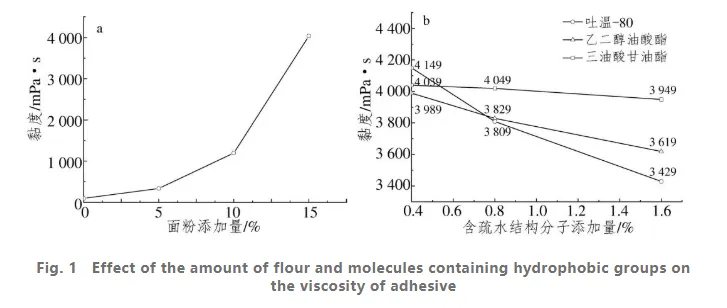
As a modified urea formaldehyde resin adhesive for the flooding process, the key requirement is that it maintains good pre-press efficiency and hot-press curing performance even when applied in a low-viscosity state. Based on the application characteristics of modified urea-formaldehyde resin adhesives in plywood production, fillers (typically flour) need to be added during use to increase the solid content of the adhesive, thereby reducing the drainage time required for the subsequent hot-pressing process, improving production efficiency, controlling yield, and ensuring the pre-press forming efficiency of the glued board blanks.
After the modified urea formaldehyde resin adhesive is blended with flour, associative interactions between the components (hydrogen bonds and intermolecular entanglements) tend to increase the viscosity of the adhesive solution. As the standing time increases, the viscosity will rise further.
However, the coating process requires the modified urea formaldehyde resin mixture to possess good flowability, and the rate of viscosity increase must be controlled within a reasonable range over a short period to ensure consistent adhesive application over a specific timeframe. Consequently, the rapid increase in viscosity upon preparation of the modified urea-formaldehyde resin mixture conflicts with the coating process requirements.
As urea formaldehyde resins are water-based, hydrophobic molecules should be introduced to weaken the associative interactions between the adhesive components. Consequently, molecules containing hydrophobic structures commonly used in industrial production have emerged as potential candidates for regulating viscosity reduction in urea formaldehyde resin adhesives. However, to date, no relevant reports have been found on the use of hydrophobic molecules to control the viscosity of urea-formaldehyde resin adhesives.
To explore the feasibility of this hypothesis, this study aims to control the viscosity of the adhesive solution by adding molecules with hydrophobic structures—glycerol trioleate, ethylene glycol oleate, and Tween-80—to weaken intermolecular interactions among the active components.
The study focuses on investigating the effects of the type and dosage of molecules containing hydrophobic structures on the viscosity and rate of increase of the adhesive solution, analysing the mechanisms underlying viscosity reduction and control, and assessing the impact of adding such molecules on the adhesive’s bonding strength.
The aim is to provide a scientific basis and technical reference for the appropriate application of modified urea formaldehyde resin adhesives in plywood production lines utilising the coating method.