
jinjiang melamine

Tech Blog

melamine in food properties, hazards, and commonly used detection methods

Melamine powder is a synthetic organic nitrogen-containing heterocyclic compound widely used in industrial applications, including coatings, plastics, and textiles. However, its illegal addition to food (known as “protein powder” due to falsely inflated protein content) has caused serious safety incidents, including pet poisoning and the 2008 Chinese milk scandal. Understanding the melamine in food properties, health hazards, and detection methods of melamine is crucial for food safety regulation and public health protection.

Basic properties of melamine

The chemical and physical properties of melamine powder determine its behavior and detection feasibility in food:

Chemical structure

Chemical name: 2,4,6-triamine-1,3,5-triazine (or 1,3,5-triazine-2,4,6-triamine), CAS number: 108-78-1.
Molecular formula: C3H6N6, relative molecular weight: 126.12.
Core structure: A triazine ring containing three amino groups, which leads to its high nitrogen content (66.6% by mass) – this is the key reason why it is abused to falsify protein content.

Physical properties

Appearance: White monoclinic prismatic crystal, odorless, with a density of 1.573 g/cm ³ (16 ° C).
Solubility: soluble in hot water, slightly soluble in cold water, extremely slightly soluble in hot ethanol, insoluble in ether, benzene, and carbon tetrachloride. It can also dissolve in methanol, formaldehyde, acetic acid, and hot ethylene glycol.
Stability: Chemically stable under normal conditions, but may decompose in high temperature or strong acid-base environments.

Health risks of melamine in food

Melamine itself has low acute toxicity, but its cumulative and combined effects pose a significant health threat to susceptible populations such as infants and pets.

Toxicity mechanism

Melamine is poorly metabolized in the human body and has a slower excretion rate. When consumed in large quantities or for a long period of time, it will bind with uric acid (or cyanuric acid, a melamine analogue) in the urinary system, forming insoluble macromolecular complexes.

These complexes deposit in the kidneys and bladder, forming stones that physically block the renal tubules, leading to hydronephrosis and ultimately renal failure.

melamine Toxicity and target organ damage

Selective toxicity: extremely toxic to cats. The acute toxicity to the human body is relatively mild, but long-term exposure will cause irreversible damage to the reproductive system and urinary system (kidney stones, bladder epithelial hyperplasia, and even bladder cancer).

Vulnerable group: Infants and young children are more susceptible to infection due to immature kidney function – exposure to melamine-contaminated milk powder may lead to severe kidney damage.

Clinical symptoms of poisoning

Animal symptoms: reduced feeding, weight loss, urinary tract crystallization, bladder stones, decreased survival rate, and uremia (vomiting, drowsiness, antispasmodics, hyperphosphatemia, and polyuria).

Human symptoms: Early symptoms include decreased appetite, nausea, and abdominal pain; Serious cases include kidney stones, hematuria, and acute kidney failure.

Risks of melamine analogues

Analogues of melamine (cyanuric acid, cyanuric acid monoamide, cyanuric acid diamide) may have synergistic toxicity with melamine. Their mixture is associated with acute kidney failure in poisoned cats, dogs, and infants, although the specific synergistic mechanism still needs further investigation.

Common detection methods for melamine in food

To prevent illegal additions, various standardized detection methods have been developed, each with unique advantages and application scenarios. The Chinese national standard GB/T 22388-2008 specifies three core methods for milk and dairy products:

Industrial purity testing methods

Bitter acid method: Dissolve the sample in hot water, adjust the pH value with sulfuric acid, and measure the mass of melamine precipitate to determine purity. Simple structure but low sensitivity, suitable for industrial raw material testing.

Sublimation method: Heat the sample under negative pressure and calculate the mass difference before and after sublimation to quantify the trimer. Fast speed, but susceptible to interference from volatile impurities.

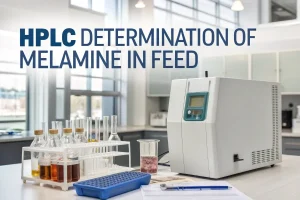
High-performance liquid chromatography (HPLC)

Principle: Extract the sample with trichloroacetic acid, acetonitrile, or hydrochloric acid, purify it through cation exchange solid-phase extraction (SPE) column, and quantify it using external standard methods.

Process: Screen the sample (0.145mm), extract with 0.1 mol/L hydrochloric acid (ultrasonic extraction for 30 minutes), centrifuge, purify with a Waters Oasis MCX column, concentrate the solution, and filter (0.45 μ m membrane) for high-performance liquid chromatography.

Advantages: High precision, good reproducibility, and wide applicability (applicable to milk, dairy products, and other foods).

Limitations: Professional equipment is required, and the sensitivity is lower than that of mass spectrometry methods.

FAQ

Q1: Does melamine naturally exist in food?
A1: Yes, but the concentration melamine in food is extremely low (from environmental pollution or food packaging materials), and there is no health risk. Harmful levels come from intentional illegal additions.

Q2: Why is melamine being abused in food?
A2: Its high nitrogen content (66.6%) allows it to falsify protein test results -0.1 grams of melamine can artificially increase protein content by 0.4%.

Q3: Which foods are most susceptible to melamine contamination?
A3: High protein products such as milk, dairy products, and feed. It may also be present in processed foods that contain contaminated ingredients.

Q4: Will cooking destroy melamine?
A4: No. Melamine is heat-resistant and will not decompose at normal cooking temperatures (100-200 ° C).

conclusion

The illegal addition of melamine poses a serious threat to public health, but its risks can be mitigated through appropriate testing and regulation.

For food manufacturers, strict adherence to non-additive regulations is crucial; For regulators, selecting appropriate testing methods and strengthening supervision to ensure market safety; For consumers, understanding high-risk products and relying on certified brands can reduce exposure risks. With advances in food safety technology, more sensitive and rapid detection methods will continue to improve melamine risk management and protect public health.

Related Blogs

Jinjiang chemical

Contact Us to Start Your Business