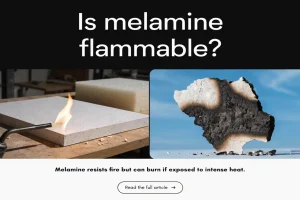

Is melamine flammable?
Tech Blog Is melamine flammable? “Is melamine flammable?” Many people mistakenly classify all plastic-like materials as flammable and worry about fire risks when using or
Mercury (Hg) and its compounds are among the most persistent and toxic environmental pollutants. They accumulate in water bodies, transform into even more toxic organic forms (e.g., methylmercury), and biomagnify through the food chain, causing severe health issues in humans and wildlife. Effective, low‑cost, and environmentally friendly methods for removing mercury from wastewater are therefore critical.
Among the various treatment technologies – chemical precipitation, ion exchange, membrane filtration, and adsorption – adsorption stands out for its simplicity, high efficiency, and ability to achieve deep purification. While many synthetic and natural adsorbents exist, they often suffer from high production costs, complex preparation steps, or limited performance.
Recent research has identified melamine – a cheap, widely available industrial chemical – as a highly promising adsorbent for mercury ions.
| pH | Observations |
| Low (acidic) | Melamine partially dissolves; excess H⁺ competes with Hg²⁺ for amino groups → low adsorption |
| 5.0 | Maximum adsorption capacity (606 mg/g) and rate (38.9%) – optimal |
| ≥6.0 | Sharp increase in removal – but due to Hg²⁺ hydrolysis and precipitation, not true adsorption |
| Time (h) | Adsorption Capacity (mg/g) | Adsorption Rate (%) |
| 6 | 560 | 38.1 |
| >6 | Slow increase, reaches ~606 mg/g at 6 h (optimal) |
| Temperature (°C) | Adsorption Capacity (mg/g) | Adsorption Rate (%) |
| 30 | 606 | 38.9 |
| Above 30 | Continues to increase | Increases |
| Feature | Benefit |
Low cost | Mass‑produced industrial chemical, far cheaper than specialty resins or modified bio‑adsorbents |
High capacity | 606 mg/g – among the highest reported for raw, unmodified adsorbents |
No complex synthesis | Use as‑received; no need for grafting, crosslinking, or surface activation |
Fast kinetics | Equilibrium within 6 hours |
Works at mild pH (5.0) | No need for extreme acidic or alkaline conditions |
Potential for reuse | (Not studied in this paper, but complexed mercury could be eluted with strong acids or chelators) |
Q1: Can I simply add melamine powder to mercury‑contaminated water to remove it?
Yes, in principle. However, the powder may be slow to settle. For practical use, melamine can be packed into a column (fixed‑bed adsorption) or used in stirred tanks followed by filtration or centrifugation.
Q2: What is the optimal pH for mercury removal with melamine?
pH 5.0 provides the best balance between high adsorption capacity and mercury precipitation prevention. Below pH 3, melamine starts to dissolve; above pH 6, Hg²⁺ forms insoluble hydroxides.
Q3: How does melamine compare to activated carbon?
Activated carbon has a broader pore structure and can adsorb many organics, but its mercury capacity (especially for raw carbon) is often lower (<200 mg/g). Melamine’s capacity of ~600 mg/g is significantly higher, and melamine is cheaper. However, AC is more robust over a wide pH range.
Q4: Is the adsorption reversible?
Yes, mercury can be desorbed using acidic solutions (e.g., 0.5 M HCl) or strong chelators (e.g., EDTA, thiourea). After desorption, melamine can be reused, though some capacity loss may occur over cycles.
Q5: Can melamine selectively remove mercury from water containing other metals?
The original study indicates that melamine also adsorbs Pb, Cu, and Ni, so it is not highly selective for Hg alone. However, its strong affinity for Hg means that in competitive situations, Hg²⁺ may still be preferentially bound. For selective removal, additional surface modification (e.g., grafting thiol or thiourea groups) would be needed.
Q6: What is the maximum reported adsorption capacity of melamine for mercury?
Under optimized conditions (pH 5.0, 30 °C, 6 h, initial Hg concentration ~5430 mg/L, melamine dose 50 mg/25 mL), the capacity reached 606 mg/g. This is one of the highest values for an unmodified organic adsorbent.
Q7: Does melamine release any toxic byproducts during adsorption?
No. Melamine is chemically stable under the adsorption conditions (pH 5, <60 °C). It does not leach out its nitrogen atoms or degrade into harmful compounds. However, the adsorbed mercury poses a toxicity risk, so handling of loaded melamine requires care.
Tech Blog Is melamine flammable? “Is melamine flammable?” Many people mistakenly classify all plastic-like materials as flammable and worry about fire risks when using or

Tech Blog Why can’t melamine be microwaved? If you use melamine tableware for home dining, school cafeterias, or restaurant service, you have likely seen the
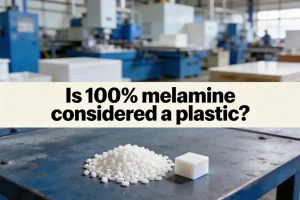
Tech Blog Is 100% Melamine Considered a Plastic? Shoppers, tableware buyers, and material engineers often ask a critical question: Is 100% melamine considered a plastic?

JINGJIANG MELAMINE POWDER
© JINJIANG MELAMINE