Melamine In Polyurethane Foam Application
Tech Blog Melamine in Polyurethane Foam Application Polyurethane (PU) foam is one of the most widely used polymer materials in the world. They have excellent
Polyurethane (PU) foam is one of the most widely used polymer materials in the world. They have excellent thermal insulation, a high strength-to-weight ratio, oil resistance, and durability. However, one major disadvantage remains: polyurethane foam is highly flammable. The limiting oxygen index (LOI) of soft polyurethane foam is only 17-18, and it will release thick smoke and toxic gases when burning. This makes flame retardancy the primary focus of the research.
This paper discusses how melamine and its derivatives enhance the fire safety of polyurethane foam, their synergistic interactions with other flame retardants, and their impact on foam performance.
Melamine (2,4,6-triamino-1,3,5-triazine) is a nitrogen-rich heterocyclic compound with significant thermal stability, flame retardancy, environmental friendliness, excellent mechanical properties, and resistance to aging and chemical reagents.
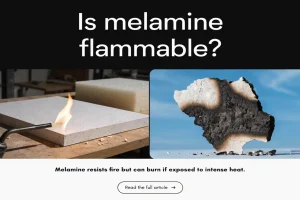
Melamine powder is non-flammable and easily sublimates upon heating, but decomposes upon rapid heating. The reason it has become an excellent flame retardant is mainly that it undergoes a decomposition reaction at 250-450 ° C, absorbs a large amount of heat, and releases ammonia, which forms various condensed polymers; it can affect the melting behavior of materials and accelerate their carbonization into coke.
In addition, melamine powder is low-cost, non-corrosive, non-toxic, and does not irritate the skin or eyes. It does not contain halogens (chlorine or bromine), making it an environmentally friendly choice.
| Melamine + Al(OH)₃ + DMMP + TCEP | Achieves required flame retardancy with much lower total additive levels |
| Melamine + phosphorus compounds | Nitrogen‑phosphorus synergy – forms a dense, uniform char layer that insulates and suppresses smoke |
| Melamine + expandable graphite | Improved thermal stability, low discoloration, halogen‑free |
Q1: Is melamine a reactive or additive flame retardant?
Melamine is typically used as an additive. However, modified derivatives like aminopolyurea polyols are reactive – they become part of the polymer backbone, preventing migration.
Q2: Does melamine produce toxic smoke when burned?
Compared to halogenated flame retardants, melamine produces less smoke and less toxic gases. It releases mainly ammonia and nitrogen, which are less harmful than hydrogen halides.
Q3: Can melamine alone make PU foam flame‑retardant?
Yes, but it often requires high loadings (≥30‑50 phr), which may negatively affect mechanical properties and processing. Combining it with phosphorus compounds or aluminum hydroxide gives better results at lower loadings.
Q4: What types of PU foam benefit most from melamine?
Flexible foams (e.g., furniture, mattresses, car seats) are the most common applications. Rigid foams can also benefit, especially when modified melamine derivatives are used.
Q5: Is melamine‑based flame retardancy durable?
Additive melamine can migrate over time. For long-term performance, reactive melamine derivatives (such as aminopolyurea polyols) are recommended – they are chemically bound and will not leach.
Melamine and modified melamine are high-performance, halogen-free flame-retardants for flexible and rigid polyurethane foams. They effectively improve fire resistance, suppress smoke, reduce toxicity, and support green manufacturing.
Through modification and synergistic formulation, the melamine-based system achieves excellent flame retardancy while maintaining the elasticity, strength and processability of foam.
Melamine powder will remain a key material for the development of low-toxicity, low-smoke, high-safety polyurethane foam for building, automotive, furniture, and transportation applications.

Tech Blog Melamine in Polyurethane Foam Application Polyurethane (PU) foam is one of the most widely used polymer materials in the world. They have excellent

Tech Blog Determination of Iron Content in Melamine In the fiercely competitive melamine market, product quality has become a key factor for global customers. Iron

Tech Blog How Melamine Enterprises Unlock New Blue Oceans? Against the backdrop of overcapacity and intensified homogeneous competition in the chemical industry, melamine—a traditional chemical

JINGJIANG MELAMINE POWDER
© JINJIANG MELAMINE