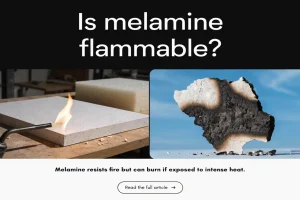

Is melamine flammable?
Tech Blog Is melamine flammable? “Is melamine flammable?” Many people mistakenly classify all plastic-like materials as flammable and worry about fire risks when using or
If you are driving a modern diesel truck, tractor, ship, or heavy vehicle, you may have heard of Diesel Exhaust Fluid (DEF), also known as Automotive Urea Solution, AUS 32, or AdBlue. But many people do not fully understand how urea works in diesel engines.
This article briefly explains the science: the role of urea in diesel engines, how it cleans exhaust gases, why it is needed, and how SCR systems use urea to reduce pollution.
When people talk about ‘urea in diesel engines’, they actually refer to diesel exhaust fluid (DEF), also known as AdBlue in Europe and AUS 32 internationally. This is different from agricultural urea fertilizers. Diesel exhaust fluid is a precisely formulated aqueous solution consisting of 32.5% high-purity urea and 67.5% deionized water.
Important note: DEF is never mixed with diesel. It is stored in a dedicated, separate fuel tank and injected directly into the exhaust stream, rather than into the engine’s combustion chamber.
The naming varies by region: ‘AdBlue’ is a trademark name used in Europe and Australia, while ‘Diesel Exhaust Fluid (DEF)’ is the standard name in North America; both refer to identical products that meet the same specifications.
Urea works through a clean chemical reaction called Selective Catalytic Reduction (SCR). Convert harmful NOx into harmless nitrogen and water vapor.
Consider the SCR system as an after-treatment device located between the engine and the exhaust pipe. Before the exhaust gases are emitted into the atmosphere, they pass through this treatment system, where urea is injected and undergoes catalytic reactions.
Importantly, urea itself does not directly participate in nitrogen oxide reduction reactions. On the contrary, under the high temperature of exhaust gas, urea first decomposes to produce ammonia, which reacts with nitrogen oxides.
When urea solution (CO(NH₂)₂) is injected into the hot exhaust stream—typically at temperatures ranging from 200°C to 450°C—two reactions take place:
Thermal decomposition (thermolysis):
CO(NH₂)₂ → NH₃ + HNCO
Hydrolysis:
HNCO + H₂O → NH₃ + CO₂
The net overall decomposition reaction is:
(NH₂)₂CO + H₂O → 2NH₃ + CO₂
This means that 1 mole of urea combines with 1 mole of water to produce 2 moles of ammonia and 1 mole of carbon dioxide.
Once ammonia is generated, it passes over the SCR catalyst—typically a ceramic or metallic substrate coated with base metal oxides such as vanadium‑tungsten‑titania or zeolites with copper or iron active sites.
On the catalyst surface, ammonia selectively reacts with nitrogen oxides (NO and NO₂). The primary reactions include:
Standard SCR reaction (fastest and most efficient):
NO + NO₂ + 2NH₃ → 2N₂ + 3H₂O
Standard NO reduction:
4NO + 4NH₃ + O₂ → 4N₂ + 6H₂O
NO₂ reduction:
6NO₂ + 8NH₃ → 7N₂ + 12H₂O
Is urea mixed with diesel fuel?
No. This is a persistent misconception. Urea solution is stored in a separate tank and injected directly into the exhaust stream. It never enters the engine’s combustion system.
Can I use agricultural urea instead of DEF?
Absolutely not. Only high-purity DEF meeting ISO 22241 specifications should be used. Agricultural-grade urea contains impurities—including biuret, aldehydes, and various particulates—that would damage the SCR catalyst, clog injectors, and potentially cause thousands of dollars in repairs.
Does urea freeze, and will that damage my engine?
DEF freezes at approximately -11°C (12°F). When urea freezes, it expands, which can potentially cause tank or line damage if overfilled. However, the system is designed to handle this: DEF tanks contain heating elements that rapidly thaw frozen fluid upon engine startup. The system does not begin dosing DEF until sufficient temperature is reached, so a frozen tank at cold start does not prevent engine operation.
What happens if I run out of DEF?
Modern vehicles monitor DEF levels and provide warnings well before the tank runs dry. If DEF is depleted, the engine’s power will be limited (a process called “derating”), and ultimately, the vehicle may not start until DEF is replenished. This ensures emissions compliance cannot be circumvented by simply not using DEF.
What is the shelf life of DEF?
If stored at temperatures between -10°C and 30°C (14°F–86°F), DEF has a shelf life of approximately one year. At higher temperatures (around 35°C / 95°F), shelf life decreases to six months or less. DEF should not be stockpiled for extended periods and must be stored in sealed, dedicated containers.
Can DEF crystallize and cause problems?
Yes, DEF crystallization is a known issue that can restrict flow to the SCR system, trigger fault codes, and cause engine derating. Crystallization occurs when water evaporates from the solution (leaving concentrated urea deposits) or when DEF is repeatedly frozen and thawed. Proper storage—in sealed containers between 12°F and 86°F—prevents most crystallization issues。
Simply put, how does urea work in diesel engines? Urea (DEF) is injected into high-temperature exhaust gas, converted into ammonia, and neutralizes the gas inside the toxic NOx SCR catalyst. It converts dangerous pollution into safe nitrogen and water vapor.
Urea is not a fuel additive; it is an emissions cleaner that makes modern diesel engines cleaner, more efficient, and legal worldwide.
If you drive a diesel car, using high-quality automotive urea can help reduce emissions, extend catalyst life, and optimize engine performance.
Tech Blog Is melamine flammable? “Is melamine flammable?” Many people mistakenly classify all plastic-like materials as flammable and worry about fire risks when using or

Tech Blog Why can’t melamine be microwaved? If you use melamine tableware for home dining, school cafeterias, or restaurant service, you have likely seen the
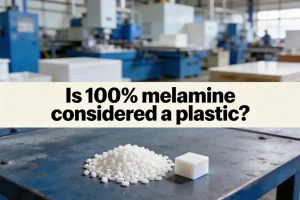
Tech Blog Is 100% Melamine Considered a Plastic? Shoppers, tableware buyers, and material engineers often ask a critical question: Is 100% melamine considered a plastic?

JINGJIANG MELAMINE POWDER
© JINJIANG MELAMINE