
Is melamine a natural substance?
Tech Blog Is Melamine a Natural Substance? Is melamine a natural substance? The straightforward answer: Melamine is a fully synthetic industrial chemical. It does not

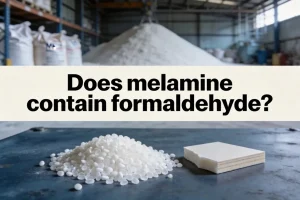
“Does melamine contain formaldehyde?” This is one of the most common misconceptions about melamine kitchenware. The simple answer: Pure melamine monomer contains no formaldehyde. Melamine-formaldehyde (MF) resin—the material used for melamine plates and bowls—is chemically synthesized from melamine and formaldehyde, and finished products may contain tiny amounts of residual free formaldehyde.
This article clarifies the chemistry, residual formaldehyde levels, migration conditions, regulatory limits, and safety guidelines to help you understand melamine and formaldehyde exposure.
Melamine powder (C₃H₆N₆) is a standalone organic compound made of carbon, hydrogen and nitrogen. On its own, it has zero formaldehyde in its molecular structure.
To make hard, shatter-resistant tableware, manufacturers react melamine powder with formaldehyde under heat and pressure. This chemical reaction creates cross-linked melamine-formaldehyde thermoset resin. Once fully cured, melamine and formaldehyde molecules lock together into a stable polymer network.
Pure melamine powder (raw monomer): No formaldehyde.
Cured melamine-formaldehyde resin (finished melamine ware): Made using formaldehyde as a reactant. High-quality fully cured products retain only trace residual free formaldehyde.
Low-cost urea-formaldehyde imitation ware: Not real melamine. It has much higher free formaldehyde and is unsuitable for food contact.
During resin curing, most formaldehyde is consumed in the polymerization reaction. Reputable A5 food-grade melamine products pass FDA, LFGB, and EU food-contact standards. The residual free formaldehyde is minimal under normal room-temperature use.
Regulators such as EFSA and BfR set strict specific migration limits for formaldehyde leaching into food. Under normal serving conditions for cold or warm food, formaldehyde migration stays safely below these legal thresholds.
However, the cross-linked resin bonds can break down under harsh conditions:
When the resin degrades, bound formaldehyde can release and migrate into food. This is the main source of formaldehyde exposure risk for users of melamine tableware.
Formaldehyde is classified as an IARC Group 1 carcinogen, but risk depends entirely on the route and concentration of exposure. The high cancer risk is mainly linked to repeated inhalation of high formaldehyde vapors in manufacturing workshops.
For end consumers using certified melamine tableware correctly:
Cheap uncertified tableware, often urea-formaldehyde masquerading as melamine, is the bigger hazard. These poorly cured items release large amounts of formaldehyde even at moderate temperatures.
Never microwave, bake or air-fry melamine tableware.
Avoid leaving boiling or highly acidic hot food sitting on melamine plates for extended periods.
Buy only A5 food-grade melamine with valid food-contact certifications.
Discard melamine items with deep scratches, chips, cracks or discoloration. Damaged surfaces expose the inner resin and increase leaching of formaldehyde and melamine monomer.
Use soft sponges instead of abrasive scouring pads to prevent scratching.
Use the top rack in the dishwasher; skip high-temperature sanitizing cycles.
Q: Does melamine itself have formaldehyde in its chemical formula?
A: No. Pure melamine monomer contains no formaldehyde. Formaldehyde is added only during resin production to create a melamine-formaldehyde polymer.
Q: Will melamine plates always leach formaldehyde into food?
A: Fully cured certified melamine releases only trace formaldehyde under proper use. Leaching becomes significant only under high heat, acidic food or damaged surfaces.
Q: What is the difference between melamine-formaldehyde and urea-formaldehyde tableware?
A: True melamine ware uses melamine + formaldehyde resin. Urea-formaldehyde is an inexpensive substitute. It has poor stability and releases much higher formaldehyde, especially when heated. It is not food-safe.
Q: Is melamine safe for children’s plates?
A: Certified food-grade melamine is safe for cold and warm meals. It is shatterproof for kids. Never heat food in melamine children’s tableware, and inspect regularly for scratches.
Pure melamine monomer contains no formaldehyde. Melamine tableware is made from melamine-formaldehyde resin, produced by reacting melamine and formaldehyde. High-quality, fully cured, food-grade melamine contains only tiny amounts of residual free formaldehyde.
Formaldehyde migration is minimal when used for cold or mildly warm food. Risk increases dramatically with microwave heating, boiling acidic food, or low-grade counterfeit products.
If you follow usage guidelines and buy certified A5 melamine ware, formaldehyde exposure remains within safe regulatory limits for daily serving.

Tech Blog Is Melamine a Natural Substance? Is melamine a natural substance? The straightforward answer: Melamine is a fully synthetic industrial chemical. It does not

Tech Blog Is there lead in melamine? Is there lead in melamine? The short answer: Pure melamine-formaldehyde base resin contains no lead. Lead may appear
Tech Blog Does melamine contain formaldehyde? “Does melamine contain formaldehyde?” This is one of the most common misconceptions about melamine kitchenware. The simple answer: Pure

JINGJIANG MELAMINE POWDER
© JINJIANG MELAMINE