

Is melamine flammable?
Tech Blog Is melamine flammable? “Is melamine flammable?” Many people mistakenly classify all plastic-like materials as flammable and worry about fire risks when using or

Melamine powder is an important organic chemical intermediate, known for its high nitrogen content and strong reactivity. When mentioning the relationship between melamine and resins, most people first think of melamine-formaldehyde resin (melamine resin). However, melamine’s applications in the resin field extend far beyond this—it can serve as a monomer for synthesizing specialized resins, and also play multiple roles as a crosslinking agent, modifier, flame retardant, curing agent, etc., widely used in various resin systems such as urea-formaldehyde resin, polyurethane, epoxy resin, phenolic resin, and acrylic resin, endowing these resins with superior performance. This article will comprehensively analyze the diverse applications of melamine in resins.
Melamine (chemical formula C₃H₆N₆) is a triamide compound containing a triazine ring, with each molecule containing six reactive amino hydrogen atoms, providing abundant reaction sites. This structural characteristic determines the versatility of melamine in the resin field:
It is these characteristics that enable melamine to participate in different resin systems in various forms, playing different roles.
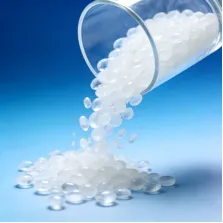
In the coating field, the most important application of melamine is as an amino resin crosslinking agent. Amino resins, formed by the polycondensation of amino-group-containing compounds (such as melamine, urea, benzoguanamine) with formaldehyde, act as bridging agents in coatings.
Etherified melamine resins, such as methylated melamine resin and butylated melamine resin, are used in combination with base resins like alkyd resins, polyester resins, acrylic resins, and epoxy resins. Through heat-induced crosslinking, they form three-dimensional network films. This crosslinking reaction endows the film with excellent properties:
Coatings using amino resins as crosslinking agents are widely used in industrial fields such as automobiles, industrial and agricultural machinery, steel furniture, household appliances, and metal pre-coating.
Different types of etherified melamine resins have different application characteristics:
In the rubber industry, methylated melamine resin can be used as an adhesive. The 80% solid content resin solution reacts with rubber molecular chains through methoxymethyl groups, enhancing interfacial bonding force and improving the peel resistance of composite materials. This application enables melamine resin to play an important role in tires, rubber products, and other fields.
Urea-formaldehyde resin (UF) is a widely used, low-cost wood adhesive, but its main drawbacks are formaldehyde release during use and poor water resistance. Melamine is one of the most commonly used modifiers for improving urea-formaldehyde resin.
Research shows that using melamine-modified urea-formaldehyde resin brings multiple benefits:
Studies by Wu Tao et al. found that using PVA and melamine-modified urea-formaldehyde resin significantly improved the water resistance of the adhesive and reduced free formaldehyde content. This modified urea-formaldehyde resin is widely used in wood-based panel production, especially in applications requiring high water resistance.
Phenolic resin (PF) has excellent bonding strength and water resistance, especially outstanding boiling water resistance, but its drawbacks include dark color, certain brittleness, susceptibility to cracking, and the high cost of phenol. Melamine can be used as a modifier for phenolic resin.
Introducing melamine during phenolic resin synthesis can:
Polyurethane foam, known for its excellent shock absorption, pressure resistance, thermal insulation, and other properties, is widely used in aerospace, pipeline transportation, furniture, automotive, and building exterior wall applications. However, its flammability has always been a significant factor restricting its development.
As a nitrogen-rich flame retardant, melamine is widely used in polyurethane foam. Recently, Associate Professor Zhang Qinqin’s team at Qingdao University of Science and Technology proposed a modification method for melamine, preparing glycerol-modified melamine-formaldehyde resin through the reaction of melamine, paraformaldehyde, and glycerol. This resin shows good compatibility with polyurethane foam and can be stably stored at room temperature for over one and a half years.
Polyurethane foam prepared with this modified resin exhibits excellent mechanical properties and significantly improved flame retardancy efficiency. Simultaneously, the introduction of sodium alginate and lignosulfonate can reduce smoke generation during foam combustion to varying degrees. This research, published in the International Journal of Biological Macromolecules, has practical significance for improving the flame retardancy of polyurethane foam and the high-value utilization of biomass resources.
Traditional melamine resin, synthesized from melamine and formaldehyde, is widely used in the leather industry as a retanning agent. However, formaldehyde emission poses a significant challenge to traditional melamine resin.
Addressing this issue, researchers have developed formaldehyde-free melamine resins. A recent study introduced a novel formaldehyde-free melamine resin retanning agent synthesized from cyanuric chloride, L-lysine, and sodium sulfanilate. The presence of amino, carboxyl, and sulfonic acid groups in this resin enhances its storability and endows it with amphoteric characteristics.
Research results indicate that this formaldehyde-free melamine resin achieves a thickening rate of 37% with undetectable formaldehyde. It also exhibits excellent physical and mechanical properties, mainly attributed to coordination and electrostatic interactions between chrome-tanned collagen fibers and amino/carboxyl groups. This research provides an innovative approach for developing formaldehyde-free melamine resin retanning agents, significantly contributing to the sustainable development of leather manufacturing.
With increasing environmental awareness, the high-value utilization of biomass resources has become a research hotspot. Researchers have developed sodium alginate-based melamine-formaldehyde resin and lignin-based melamine-formaldehyde resin, achieving high-value utilization of biomass resources. While maintaining excellent performance, these bio-based resins reduce the consumption of petroleum resources, aligning with the concept of green and sustainable development.
In acrylic resin systems, melamine resin can also serve as a crosslinking agent. Methylated melamine resin combined with acrylic resin is used in metal primers, automotive repair coatings, and other applications. In the presence of acid catalysts, amino resins can cure at low temperatures or room temperature, making them suitable for reactive two-component wood coatings and automotive repair paints.
Melamine resin can also be used as a crosslinking agent for epoxy resin, typically combined with high epoxy equivalent weight epoxy resins. This crosslinking system is applied in electrodeposition paints, can coatings, and other fields, providing excellent corrosion resistance and adhesion.
Research indicates that melamine can be combined with various biomass materials to prepare low-cost, high-performance wood adhesives:
In summary, melamine’s applications in the resin field extend far beyond a single melamine-formaldehyde resin. As a multifunctional chemical raw material, melamine can serve as a crosslinking agent to enhance the performance of coatings and rubber, as a modifier to optimize the defects of urea-formaldehyde and phenolic resins, as a flame retardant to improve the safety of polyurethane foam, and as a raw material to synthesize formaldehyde-free functional resins.
From automotive coatings to wood-based panels, from polyurethane foam to leather retanning agents, melamine, with its unique chemical structure, plays an irreplaceable role in various resin systems. With continuous technological advancements and increasing environmental requirements, melamine’s applications in the resin field will continue to expand, providing superior material solutions for various industries.
Tech Blog Is melamine flammable? “Is melamine flammable?” Many people mistakenly classify all plastic-like materials as flammable and worry about fire risks when using or

Tech Blog Why can’t melamine be microwaved? If you use melamine tableware for home dining, school cafeterias, or restaurant service, you have likely seen the
Tech Blog Is 100% Melamine Considered a Plastic? Shoppers, tableware buyers, and material engineers often ask a critical question: Is 100% melamine considered a plastic?

JINGJIANG MELAMINE POWDER
© JINJIANG MELAMINE